
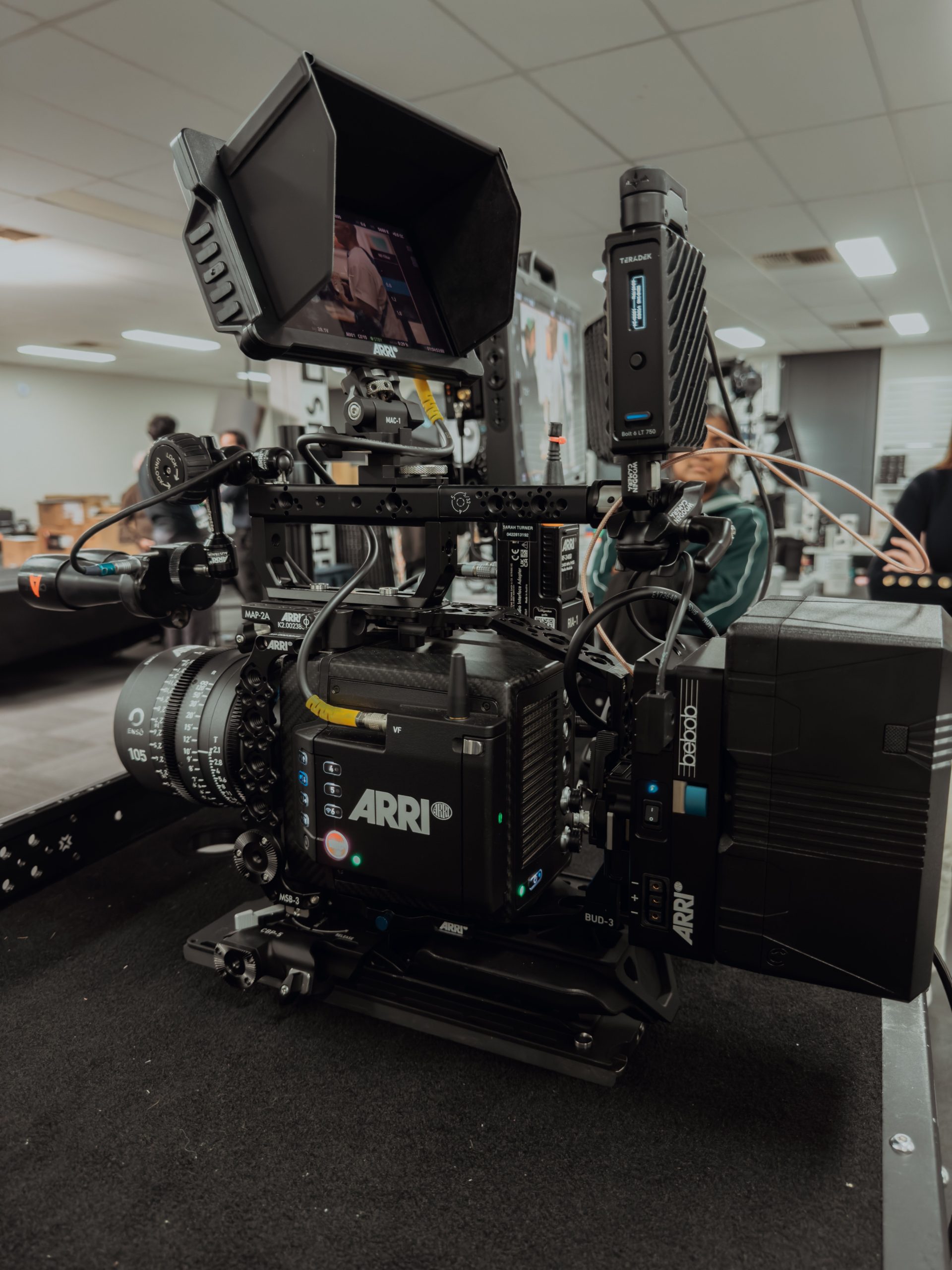

The traditional movie set is changing. For generations, filmmakers relied on physical locations, constructed sets, practical effects, and green screens to bring fictional worlds to life. Today, virtual production and real-time digital technology are giving filmmakers another option: instead of building every environment physically, they can create entire worlds digitally and place actors directly inside them.
Virtual production combines filmmaking with computer graphics, large LED displays, real-time rendering, advanced cameras, and specialized software. Rather than imagining what a digital environment will look like later during post-production, filmmakers can see much of the finished world while they are actually shooting the scene. This gives directors, cinematographers, and actors a clearer understanding of the final image from the beginning.
One of the most recognizable technologies behind this transformation is the LED volume. Large screens surround the filming area and display digital environments, allowing actors to perform against realistic backgrounds without physically traveling to those locations. The screens can display anything from futuristic cities and distant planets to deserts, forests, and imaginary landscapes.
The technology also changes how lighting works on a film set. Digital environments displayed on LED screens can provide realistic colors and reflections that interact with the actors and physical objects in front of the cameras. This can create a more natural connection between performers and their surroundings while reducing some of the limitations associated with traditional green-screen production.
Real-time rendering is another important part of the process. Powerful computers can generate digital environments instantly as cameras move through a scene. When the camera changes position, the virtual environment can adjust accordingly, creating the appearance of depth and perspective. This makes digital worlds feel more connected to the physical filmmaking environment.
The benefits extend beyond visual effects. Virtual production can allow filmmakers to preview creative decisions much earlier. Directors can experiment with camera angles, lighting, backgrounds, and compositions while filming instead of waiting months to see how everything will come together during post-production.
Actors can also benefit from seeing their environments rather than performing against a blank green screen. Being surrounded by a detailed digital world can provide visual context and make it easier to understand the setting, mood, and scale of a scene.
The technology is also changing location filmmaking. Instead of transporting large crews to multiple destinations, productions can recreate environments digitally and shoot them inside controlled studio spaces. This does not eliminate location filming, but it gives filmmakers another tool for creating ambitious stories more efficiently.
Virtual production is not replacing traditional filmmaking entirely. Practical sets, real locations, physical props, costumes, and practical effects remain essential parts of modern cinema. The most effective productions often combine physical and digital techniques, using each where it provides the greatest creative advantage.
The rise of digital environments is also creating new opportunities for engineers, software developers, visual-effects artists, game designers, cinematographers, and other technical professionals. Modern filmmaking increasingly requires collaboration between people who understand storytelling and people who understand complex digital systems.
Perhaps the biggest change is that the boundary between filmmaking and technology is becoming less visible. A movie set can now function partly like a traditional studio, partly like a computer-generated environment, and partly like a real-time game engine. The result is a new production model where digital worlds can be created, changed, and experienced while the cameras are still rolling.
As technology continues to improve, filmmakers may be able to build increasingly detailed environments with greater speed and flexibility. Artificial intelligence, advanced rendering, virtual cameras, and immersive displays could further expand what directors can visualize and produce.
The future of movie magic may therefore depend less on choosing between real and digital filmmaking.
It may depend on combining both.
The movie sets of tomorrow could be physical spaces surrounded by worlds that exist entirely inside computers—yet, on screen, audiences may never know where reality ends and the digital world begins.

Leave a Reply