
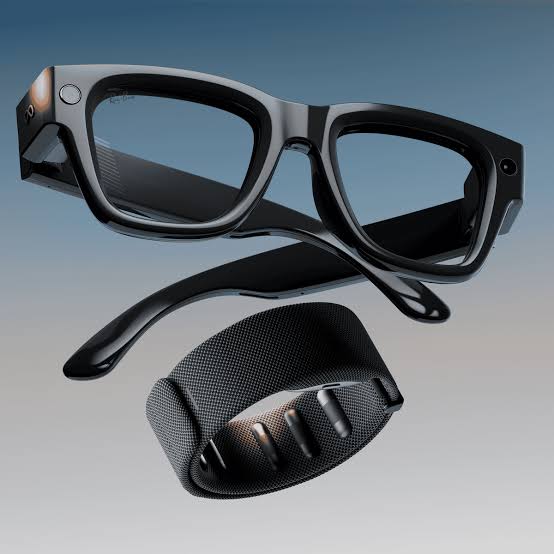

For years, artificial intelligence lived mostly behind a screen. People interacted with AI through search engines, chat windows, smartphone apps and increasingly sophisticated software platforms. You had to open something, type something or deliberately ask a question before the technology responded. That relationship is beginning to change. A new generation of AI-powered wearable devices is attempting to make artificial intelligence something people can carry with them throughout the day rather than something they have to actively open. Smart glasses, AI pins, earbuds and other emerging devices are pushing the idea that the next major technology shift may not be another screen. It may be a new way of interacting with technology altogether.
The concept is simple but potentially significant: instead of reaching for a phone every time you want information, directions, translation, reminders or assistance, an AI-enabled wearable could provide help through a device already attached to your body. The technology can potentially see, hear and respond to elements of a user’s surroundings, depending on the device and permissions involved. That creates a very different relationship between humans and computers. The computer is no longer necessarily something sitting on a desk or inside a pocket. It can become part of the environment around you.
Smart glasses are currently one of the most visible examples of this shift. Meta has continued developing its Ray-Ban Meta smart glasses, which combine cameras, microphones, speakers and AI capabilities in a familiar eyewear form. Users can interact with the glasses using voice commands and, depending on the available features and region, ask questions about what they are seeing, translate information, identify objects or get assistance while keeping their phones in their pockets. The significance is not simply that glasses can perform tasks. It is that AI is becoming increasingly ambient — available when needed without requiring a traditional screen-based interaction.
That idea represents a major departure from the smartphone era. Smartphones consolidated enormous amounts of computing power into one portable rectangle. Wearable AI is exploring the possibility of distributing that intelligence across different devices. Instead of asking a phone to do everything, people could use glasses for visual assistance, earbuds for audio interactions, watches for health and notifications, and other wearable devices for specialized functions. AI becomes the connective layer that makes those devices feel more useful and responsive.
The appeal is obvious. Imagine walking through a city and asking your glasses for directions without pulling out a phone. Imagine looking at a menu in another language and receiving a translation through audio. Imagine attending a museum and asking for information about an object directly through a wearable. Imagine cooking while keeping your hands free and asking an AI assistant to walk you through the next step. These scenarios sound futuristic, but pieces of them are already becoming possible through today’s AI-enabled devices.
The bigger technological shift, however, is not necessarily about what one particular device can do. It is about how people interact with computing. For decades, the dominant model has been graphical user interfaces: screens, buttons, menus, icons and apps. AI introduces another model based increasingly on natural language. Instead of remembering which application performs a particular task, users can simply ask an assistant for help. Wearables could make that interaction even more natural because voice and context can replace some of the traditional tapping and typing.
This could be particularly important for younger users who are growing up with conversational AI as a normal part of technology. A child who is accustomed to asking an AI assistant questions may not think of technology in terms of opening separate applications. The device becomes less important than the intelligence behind it. That is one reason wearable AI deserves attention from educators and families as well as technology enthusiasts. The question is not only what these devices can do, but how they might change the way people learn, communicate and solve problems.
There are already signs that major technology companies see wearables as an important part of the future. Meta’s smart-glasses strategy has attracted considerable attention because it places AI directly into an everyday object rather than introducing an entirely unfamiliar piece of hardware. Google’s Android XR efforts are also exploring glasses and other devices that combine artificial intelligence with spatial computing. Meanwhile, companies across the technology industry continue to experiment with earbuds, watches and other wearable formats.
The underlying race is about context.
A traditional chatbot knows what you type. A wearable assistant could potentially know more about what is happening around you, subject to its sensors, software and privacy permissions. A camera-equipped device can interpret visual information. A microphone can capture spoken instructions. Location technology can provide geographic context. Motion sensors can understand aspects of physical activity. Combine those capabilities with an AI model, and the device can potentially respond in ways that feel more personalized and immediate.
But greater context also means greater responsibility.
Privacy may be the biggest challenge facing wearable AI. A smartphone is usually obvious when someone is using it. A pair of glasses can be much less noticeable. If glasses contain cameras and microphones, people nearby may not always know when technology is recording, processing or analyzing information. That raises important questions about consent and social norms. The technology may be designed for the person wearing it, but its sensors can interact with an environment containing many other people.
Manufacturers therefore face a difficult balance. They want devices to feel seamless and powerful, but they also need visible indicators, privacy controls and clear policies that help people understand what is happening. Consumers will need to become more aware of how wearable AI handles recordings, images, conversations and personal data. Schools, businesses and public institutions may eventually establish their own rules for when AI wearables can be used.
The privacy conversation also extends to the AI assistant itself. If a wearable device becomes a constant companion, it could potentially collect a detailed picture of someone’s routines, preferences and surroundings. That information could make the assistant more useful, but it could also make the device more sensitive than many traditional consumer electronics. The more context an AI system receives, the more carefully that information needs to be managed.
Another challenge is reliability.
AI systems can make mistakes. A chatbot can misunderstand a question. A vision model can misidentify an object. A voice assistant can misinterpret a command. Those mistakes become more consequential when AI moves from a screen into the physical world. If someone asks a wearable assistant for directions, a minor error may be inconvenient. If someone relies on it for a safety-critical situation, the consequences could be much more serious.
That means wearable AI will need to become not just intelligent, but dependable.
The physical design of these devices matters too. Technology has a long history of becoming successful when it disappears into familiar objects. Smartphones became mainstream because people were willing to carry them everywhere. Wireless earbuds became normal because they fit naturally into existing habits. Smartwatches became useful because they placed notifications and information on the wrist without requiring a larger device.
AI wearables will face the same test.
People may be fascinated by the technology, but fascination does not guarantee adoption. A device needs to be comfortable, useful, reliable and affordable enough to become part of a routine. If people have to charge it constantly, struggle with connectivity or feel embarrassed wearing it, even impressive AI capabilities may not be enough.
This is why smart glasses may have an interesting advantage. Glasses are already a familiar product. Millions of people wear them every day. Adding technology to an existing form factor may be easier than convincing consumers to adopt an entirely new object.
The same logic could apply to earbuds. People already use wireless earbuds for music, calls and podcasts. Adding conversational AI could turn them into a more capable assistant without radically changing the user’s routine. Instead of looking at a screen, users could hear information directly in their ears.
That could make AI feel less like an application and more like an invisible layer of everyday life.
The implications for education are particularly interesting. Wearable AI could potentially help students translate languages, identify objects, receive explanations or ask follow-up questions while exploring the world. Imagine a student visiting a science museum and being able to ask questions about exhibits in real time. Imagine a student learning another language while receiving contextual translations during everyday activities. Imagine an outdoor science lesson where students can identify plants, rocks or astronomical objects using AI-assisted vision.
At the same time, educators would need to consider where assistance ends and learning begins.
If a student can instantly ask AI for every answer, the technology could potentially reduce the productive struggle that helps people develop understanding. Wearables could therefore become powerful educational tools, but only if they are used thoughtfully. The goal should not be to eliminate curiosity or independent thinking. It should be to enhance them.
For STEAM education, the possibilities are especially broad. Science, technology, engineering, arts and mathematics increasingly overlap with AI, and wearable devices could make that intersection more interactive. Students could use AI to observe phenomena, document experiments, brainstorm designs or explore engineering problems. Instead of treating AI as something that exists exclusively inside a computer lab, educators could introduce it as a tool for interacting with the physical world.
That is an important conceptual shift.
Technology education has often taught students how to use digital tools. The next phase may require teaching students how to collaborate responsibly with intelligent systems.
Students will need to understand that AI can be useful without being infallible. They will need to learn how to verify information, recognize limitations, protect privacy and understand where human judgment remains essential. Those skills will matter whether AI lives on a laptop, phone, pair of glasses or set of earbuds.
There is also a cultural dimension to the wearable AI movement. Personal technology has gradually moved closer to the body over time. Desktop computers became laptops. Phones became smartphones. Music players became wireless earbuds. Fitness trackers became smartwatches. Now AI is moving into glasses and other devices that people can wear continuously.
The direction is clear: computing is becoming more portable, more conversational and more integrated into daily life.
But the next big technology shift may not happen because one device becomes an overnight hit. It may happen because consumers gradually become comfortable with a new interaction model. If people get used to asking AI questions through glasses, earbuds or watches, the distinction between “using a computer” and simply “interacting with technology” may begin to disappear.
That could be one of the biggest changes of all.
The smartphone taught people to expect information immediately. AI is teaching people to expect information conversationally. Wearables could teach people to expect assistance contextually.
Those three changes together could create an entirely new computing environment.
The most successful AI wearable may ultimately be the one that people stop thinking about as an AI device. It may simply become the glasses they wear, the earbuds they use or the watch on their wrist. The intelligence will be there when needed and invisible when it is not.
Of course, the technology still has plenty to prove. Consumers will determine whether these devices are genuinely useful or simply another wave of technology hype. Privacy standards will need to evolve. AI models will need to become more reliable. Hardware will need to become lighter and more efficient. Battery life will need to improve. Developers will need to create applications that provide genuine value rather than novelty.
But the direction of travel is increasingly difficult to ignore.
AI is leaving the chat window.
It is entering the products people carry, wear and use throughout the day.
That does not necessarily mean the smartphone is disappearing tomorrow. More likely, smartphones will remain central while wearable devices gradually take over certain tasks. The future may be less about replacing one device with another and more about creating an ecosystem in which AI follows people across multiple devices.
For consumers, that could mean technology that feels more immediate and personal. For educators, it could create new ways to explore and learn. For engineers, it creates another frontier for hardware and software development. For designers, it introduces new questions about how technology should fit naturally into human routines.
And for everyone else, it raises a fascinating question:
What happens when the smartest computer you own is no longer something you have to take out of your pocket?
The answer may define the next era of consumer technology.
Caption: AI isn’t just living in your phone anymore. The next tech shift could be something you wear.
References
Meta — Ray-Ban Meta Smart Glasses
Meta — AI Features for Ray-Ban Meta Glasses


Leave a Reply