
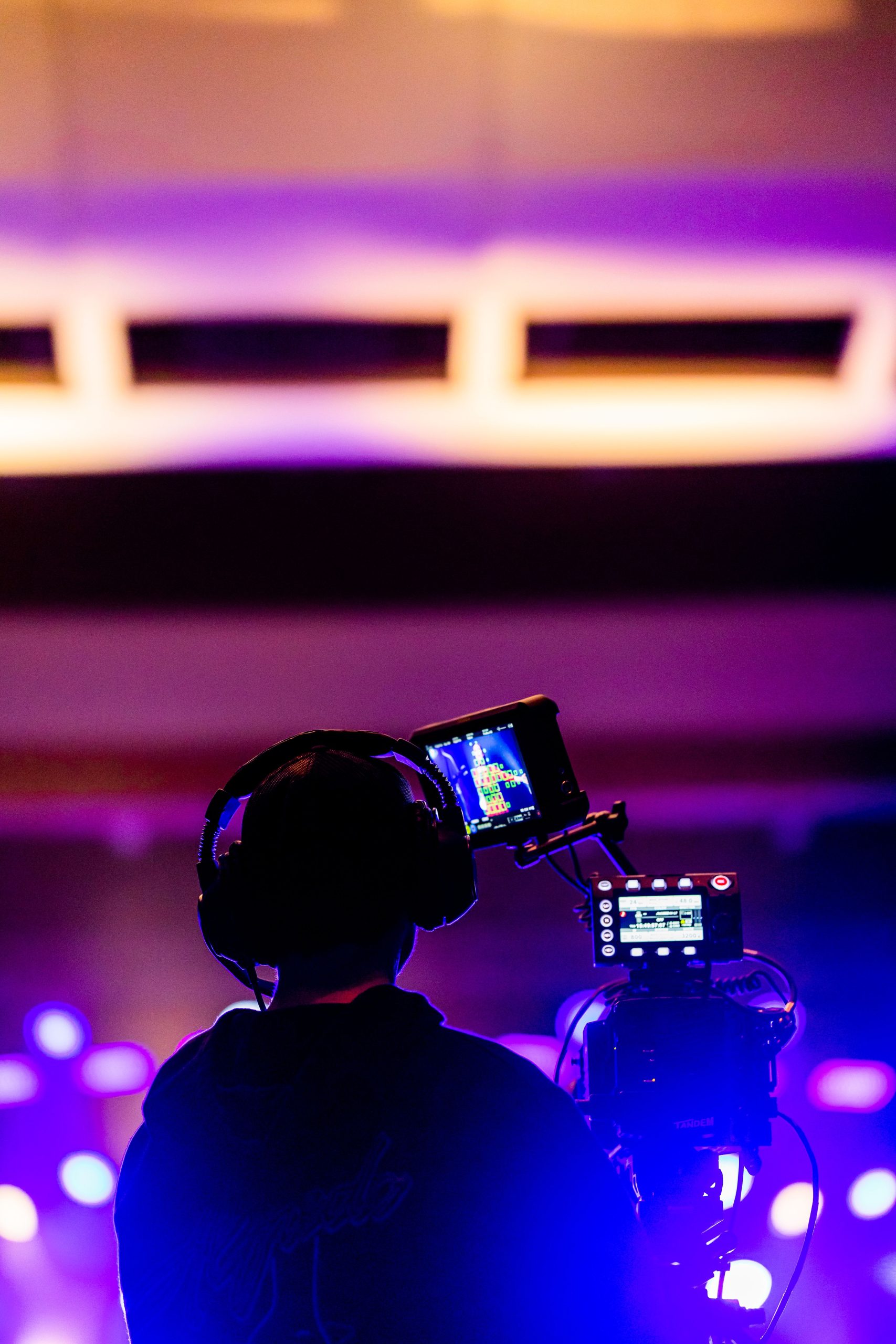

Entertainment technology used to operate mostly behind the curtain. Audiences saw the finished movie, television show, music video or social post, while the complicated machinery used to produce it remained largely invisible. Cameras, editing systems, visual-effects software and distribution platforms were tools that supported the entertainment business without necessarily becoming part of the entertainment conversation themselves.
That is changing quickly.
In 2026, technology is increasingly becoming part of the entertainment product, the production process and the business model at the same time. Artificial intelligence is being built into filmmaking workflows. Creator platforms are developing their own production ecosystems. Technology companies are trying to move deeper into Hollywood. Studios are hiring AI specialists and developing internal strategies. And creators who once needed traditional production companies are gaining access to tools that can put increasingly sophisticated capabilities inside a laptop.
The result is a new technology race behind entertainment, and this time the competition is not simply about who can produce the most impressive visual effect.
It is about who can build the infrastructure that creators will use next.
That distinction matters.
The entertainment industry has already experienced major technological revolutions. Television changed how audiences consumed stories. Home video changed how long those stories could remain commercially valuable. Digital cameras changed production. CGI transformed visual effects. Streaming changed distribution.
AI is different because it potentially touches almost every stage simultaneously.
A creator can use AI while developing an idea, generating references, creating storyboards, building visual concepts, producing footage, editing material, creating sound, translating dialogue and preparing content for different platforms.
The technology is therefore becoming less like a single tool and more like an operating layer.
That is precisely why companies are racing to build platforms rather than simply individual AI features.
Nura Studios, for example, launched Showcraft in September as a professional AI production platform intended to connect creative development, animation and finishing within one environment. Its pitch reflects a larger industry shift: generating a single AI image or video clip is no longer the only problem. Creators increasingly need systems that can keep an entire project organized and consistent.
That is an important development because entertainment production is not simply about generating individual pieces.
A movie can contain hundreds or thousands of shots.
A television series has characters who need to remain visually and narratively consistent.
A music video needs continuity.
A branded production has deadlines and approvals.
A creator working on a long-form YouTube project may have scripts, footage, graphics, music, captions and multiple revisions.
The technology race is therefore moving toward orchestration.
Who can help the creator connect all of those pieces?
That is becoming just as important as who can generate the prettiest image.
The shift is visible in the growing number of platforms attempting to connect generation with production. Current AI video tools span everything from individual shot generation and editing to systems designed to manage storyboards, references, production decisions and review. A September 2026 industry comparison noted that the market now contains several distinct layers, including video models, creative interfaces, technical workflows and broader production-management systems.
That distinction may sound technical, but it could fundamentally change the creator economy.
Imagine a filmmaker who previously needed separate software for storyboarding, visual references, editing, effects and production management.
Now imagine parts of those functions being connected.
The creator does not necessarily need fewer creative decisions.
They may simply have fewer technical barriers between the idea and the finished result.
That is where the technology becomes especially interesting.
For decades, Hollywood’s production infrastructure has been expensive. Cameras, crews, locations, post-production, visual effects and specialized talent can quickly push a project beyond the reach of an independent creator.
AI does not eliminate those costs entirely, but it can change the economics of individual production tasks.
Flow Studio co-founder Nikola Todorovic has argued that AI could dramatically reduce production costs and open filmmaking to more creators, while emphasizing the possibility of moving some traditionally expensive production processes into more accessible software.
The idea is already influencing how technology companies talk about entertainment.
The emphasis is increasingly on accessibility.
Studio-level tools are becoming creator tools.
That does not mean a single person with an AI platform suddenly has the same resources as a major Hollywood studio. Distribution, marketing, intellectual property, experienced crews and financing still matter enormously.
But the distance between an idea and a professional-looking prototype can become much smaller.
And that can have major consequences.
A creator can test a concept before raising money.
A filmmaker can build a visual pitch before assembling a full production team.
An independent studio can experiment with a visual style without committing to the cost of a traditional shoot.
A musician can build visual material around a release.
A YouTube creator can produce more elaborate worlds without constructing a physical set.
A brand can experiment with campaign concepts faster.
The technology race is therefore also a race to reduce friction.
And creators notice friction.
Every time they have to move a project between incompatible systems, recreate assets, reformat files, repeat instructions or manually complete a repetitive task, time is lost.
That is why connected AI platforms are becoming increasingly important.
The companies building these systems are not necessarily trying to replace the creator.
They are trying to become the place where the creator works.
That distinction changes the business opportunity.
A company that owns the production environment can potentially become part of every stage of a project’s lifecycle.
It can sit between the idea and the final video.
It can manage assets.
It can organize revisions.
It can connect different AI models.
It can provide editing tools.
It can provide collaboration.
It can potentially become the creator’s digital production studio.
This is where entertainment technology starts looking much more like enterprise software.
The creator is no longer simply buying an effect.
They are subscribing to an ecosystem.
That ecosystem may become increasingly valuable as projects become more complicated.
The timing is particularly interesting this week because the creator side of the entertainment technology industry is getting its own spotlight.
TheWrap’s inaugural AI Creator Day is scheduled for September 29 in Los Angeles, immediately ahead of TheGrill conference on September 30. The event brings together creators, filmmakers, technology companies and entertainment executives to discuss AI, the creator economy and new production models.
The speaker lineup illustrates how broad this conversation has become.
Creators with audiences in the tens of millions are experimenting with AI.
Technology companies are developing platforms designed specifically for creators.
Marketing companies are using AI to connect brands with creators.
Entertainment companies are examining how AI fits into their own workflows.
And filmmakers are experimenting with hybrid productions that combine traditional live-action work with generative tools.
That is a very different conversation from the one Hollywood was having several years ago.
The technology is no longer being discussed exclusively as something studios might use someday.
Creators are already using it.
That creates another important shift: the traditional boundary between Hollywood and the creator economy is becoming less obvious.
YouTube creators have already become major entertainment businesses.
TikTok creators can launch careers that cross into television, music, fashion and film.
Independent filmmakers can build audiences before entering traditional distribution.
Digital creators can produce series without waiting for a network or studio to approve the concept.
AI potentially accelerates this convergence.
If a creator can access more sophisticated production capabilities without building a traditional studio around themselves, the creator can start behaving more like a small media company.
That is exactly why the technology race is not only happening inside Hollywood.
It is happening wherever audiences are being created.
The creator economy is becoming part of the entertainment infrastructure.
And the companies building tools for creators increasingly understand that.
One of the most interesting examples is the emergence of platforms designed around characters and digital identities.
TheWrap’s AI Creator Day coverage includes Cantina, a company building platforms that allow creators to extend their characters into new environments.
That points toward another possible future for entertainment.
Instead of a character existing only inside a movie or television episode, the character could become an interactive digital presence.
Instead of a franchise ending when the credits roll, the audience could continue interacting with its characters.
Instead of a creator publishing one video, the creator could potentially build a world that audiences return to.
That does not mean every entertainment property will become interactive.
But it demonstrates how technology is changing the definition of media.
A movie is traditionally a fixed experience.
A television show is traditionally a scheduled or on-demand experience.
A social post is traditionally a short piece of content.
AI and interactive platforms blur those categories.
A character can talk back.
A fictional world can expand.
A creator can produce multiple versions of a story.
An audience can influence what happens next.
The entertainment product becomes less static.
This is where the future-media conversation becomes especially important.
The technology is not simply helping people make entertainment faster.
It is potentially changing what entertainment is.
That also creates a major challenge.
More technology does not automatically mean better storytelling.
Autodesk’s recent demonstration of an AI-generated film provided a useful reminder. The company’s own AI film contained a continuity error that could not be fixed through additional prompting, illustrating one of the persistent problems with AI-generated long-form storytelling: producing an impressive individual shot is easier than maintaining consistency across an entire production.
That problem matters.
A creator does not simply need a beautiful image.
They need the same character to remain the same character.
They need the environment to remain coherent.
They need the story to make sense.
They need the camera language to remain intentional.
They need the emotional progression to work.
They need the final production to feel like one piece rather than a collection of impressive experiments.
Technology can assist with those goals, but it does not automatically understand them.
That is why human creative direction remains central to the current technology race.
The most interesting companies are increasingly presenting AI as part of a workflow rather than the entire workflow.
That may be the more sustainable model.
The filmmaker remains responsible for the story.
The designer remains responsible for the visual language.
The editor remains responsible for rhythm.
The producer remains responsible for the project.
The technology handles some of the labor that sits between those decisions.
That model also makes the technology easier to integrate into existing entertainment businesses.
Studios do not necessarily need to abandon everything they already use.
They can introduce AI tools where they solve specific problems.
Creators can add AI to existing editing processes.
Production companies can experiment with AI-assisted previsualization.
Post-production teams can use AI for specific effects.
Marketing departments can use AI to adapt content for different platforms.
The transition can therefore happen incrementally.
And that may be exactly what we are seeing now.
The entertainment technology race is not one giant switch.
It is hundreds of smaller experiments happening simultaneously.
Some will work.
Some will fail.
Some will become standard.
Some will disappear.
The current AI video market already shows how quickly that process can happen. Tools are competing around generation quality, consistency, editing, sound, motion, character control and workflow integration, while the available products and pricing continue changing rapidly.
That speed creates another challenge for creators.
Technology can become outdated almost immediately.
A creator who builds an entire workflow around one platform may discover that another company has introduced a dramatically different capability a few months later.
That means flexibility may become more important than loyalty to one tool.
Creators will increasingly need to understand what each technology actually does rather than simply following whichever platform has the biggest marketing campaign.
This is another reason connected production systems could become valuable.
Instead of forcing creators to commit to one generation model, a platform can potentially connect multiple models and tools.
The creator cares about the finished project.
The technology provider handles some of the complexity underneath.
That is a very different business proposition.
It is also one that technology companies clearly understand.
The competition is moving from individual AI models toward ecosystems.
And entertainment may become one of the most important battlegrounds.
Hollywood has something technology companies want: enormous libraries of characters, stories, images and cultural recognition.
Technology companies have something Hollywood wants: new production capabilities, automation and potentially lower costs.
The two industries therefore need each other, but their interests are not always identical.
That tension is already visible in discussions around licensing and intellectual property. Technology companies are seeking relationships with major entertainment companies, while studios are simultaneously trying to protect their libraries and control how their intellectual property is used in AI systems.
That means the future of entertainment technology will not be decided by engineering alone.
It will also be decided by contracts.
Licensing agreements.
Creator deals.
Labor agreements.
Copyright rules.
Platform policies.
And audience expectations.
Trust may become one of the most valuable parts of the entertainment technology business.
Audiences want to know what they are watching.
Creators want to know whether their work is being used fairly.
Actors want control over their likenesses.
Studios want control over their intellectual property.
Technology companies want access to high-quality content.
Everyone has something to protect.
And everyone wants to benefit from the next stage of entertainment.
That makes the current moment unusually complicated.
But it also makes it exciting.
For the first time, technology is not simply making entertainment more efficient behind the scenes.
It is becoming part of the entertainment ecosystem itself.
The creator platform can be part of the business.
The AI production system can be part of the studio.
The digital character can become part of the franchise.
The audience can become part of the production loop.
The technology company can become part of the entertainment supply chain.
And the creator can become a media company without necessarily looking like one.
That is the new technology race behind entertainment.
It is not just about who can make the best AI-generated image.
It is about who can build the environment where the next generation of entertainment gets made.
The companies competing in this space are therefore competing for something much bigger than a software subscription.
They are competing for the creator’s workflow.
They are competing for the studio’s production pipeline.
They are competing for the audience’s attention.
And ultimately, they are competing to define what the next version of media looks like.
Hollywood used to own much of the infrastructure required to create mainstream entertainment.
Technology is gradually making some of that infrastructure available elsewhere.
That does not mean Hollywood disappears.
It means the definition of who can participate in entertainment becomes broader.
The next major filmmaker might come from a traditional studio.
They might come from YouTube.
They might come from TikTok.
They might come from a small production company.
They might work alone.
Or they might build an entirely new kind of media company around technology that does not fully exist yet.
That is why the entertainment technology story deserves attention right now.
The most important development may not be one particular AI model or one spectacular demonstration.
It may be the gradual construction of an entirely new production environment.
A place where ideas can move from concept to storyboard, from storyboard to footage, from footage to finished media and from finished media directly into the audience.
The technology is getting closer to that vision.
It is not perfect.
The tools still have limitations.
The legal questions remain unsettled.
The economics are still being tested.
And the creative community is still deciding where the boundaries should be.
But the race is already underway.
Entertainment technology is no longer waiting backstage.
It has walked onto the stage.
References
→ TheWrap — AI Creator Day Adds Rebecca Zamolo, Matt Slays, Vincent Marcus and More
→ TheWrap — Stability AI CEO Prem Akkaraju to Open AI Creator Day
→ TheWrap — TheGrill Adds AI Creator Day With What’s Trending
→ TheWrap — AI Creator Day Adds Adobe, Fox, IAB and More
→ TheWrap — The Future of Filmmaking With AI
→ PR Newswire — Nura Studios Launches Showcraft AI Production Platform
→ Creative Bloq — Autodesk’s Own AI Film Has a Continuity Error Nobody Could Prompt Away
→ The Verge — Google Needs Hollywood More Than the Studios Need AI
→ HollywoodCGFX — AI Filmmaking and VFX Tools Compared: Features, Prices and Showreels
→ AI Animation — Best AI Video Production Platforms in 2026
→ SteamDigest.co — The New Technology Race Behind Entertainment
Leave a Reply