
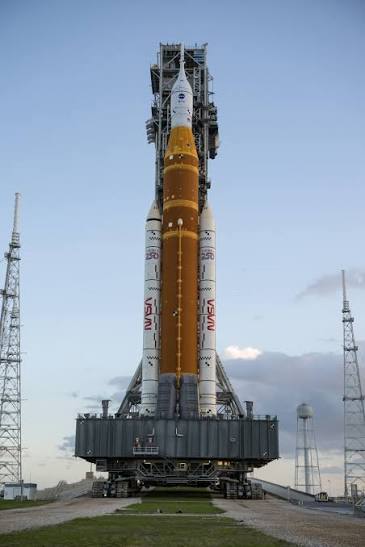

Humanity’s return to the Moon is no longer just a question of whether astronauts can travel beyond Earth orbit. The bigger challenge is building the systems that will allow them to arrive safely, explore scientifically valuable locations, and eventually remain on the lunar surface for longer periods.
NASA’s Artemis program is designed to develop those capabilities through a sequence of increasingly complex missions. Each flight is intended to demonstrate technologies, operational procedures, and spacecraft systems needed for future lunar exploration.
The next important public update is scheduled for Friday, October 23, at 2 p.m. Eastern Daylight Time. NASA says the briefing at Kennedy Space Center will address its plans to return astronauts to the lunar surface by 2028, including the role of Artemis III and progress toward future lunar landings.
As of October 19, the briefing has not yet taken place. That means the confirmed agenda can be reported, but any new decisions announced during the event must wait until NASA releases them.
For now, the available information offers a detailed look at where the program stands and why the next steps involve much more than launching a rocket.
Artemis II: A Major Step Beyond Earth Orbit
The Artemis program reached an important milestone in April 2026 when Artemis II completed its crewed journey around the Moon and returned to Earth.
The mission carried NASA astronauts Reid Wiseman, Victor Glover, and Christina Koch, together with Canadian Space Agency astronaut Jeremy Hansen. It marked the first crewed flight of NASA’s Orion spacecraft and provided experience operating human spaceflight systems beyond low Earth orbit.
The flight also gave scientists and engineers new observations of the lunar environment. NASA subsequently released more than 800 gigabytes of Artemis II lunar science data and imagery for public and scientific study.
Artemis II was not a lunar landing. Its significance was demonstrating that astronauts could travel around the Moon aboard Orion and return home, while gathering operational experience relevant to future missions.
That distinction matters because traveling around the Moon and landing on it require different capabilities.
A landing mission must coordinate the crew’s spacecraft with a separate lunar lander, transfer astronauts between vehicles, descend toward the surface, operate safely in lunar gravity, and return the crew to the spacecraft that will take them back to Earth.
Each stage introduces additional risks and technical requirements.
Artemis II demonstrated an important part of the journey. The next challenge is connecting that capability to the systems required for lunar surface operations.
What NASA Has Confirmed About the Upcoming Missions
NASA’s published Artemis plans identify several major steps between the successful Artemis II flight and a crewed lunar landing.
Artemis III: A systems demonstration in 2027
Under the current plan, Artemis III is intended to send four astronauts into low Earth orbit in 2027. Rather than attempting a lunar landing, the mission will focus on testing critical systems and operations needed for future missions.
A central objective is evaluating rendezvous and docking between Orion and commercial human landing systems being developed by SpaceX and Blue Origin.
Rendezvous is the process of bringing spacecraft together in a carefully controlled orbital environment. Docking connects the vehicles so that crew members and equipment can move between them.
These operations require accurate navigation, compatible interfaces, reliable communications, and precise control of spacecraft movement.
Testing them in Earth orbit allows engineers to evaluate important systems before attempting similar operations around the Moon.
Artemis IV: The planned return to the lunar surface
NASA continues to target a crewed lunar landing in 2028 through Artemis IV. The mission is expected to use Orion alongside a commercial human landing system capable of transporting astronauts between lunar orbit and the surface.
The exact timing and operational details depend on the readiness of the required systems. A target date is a program objective, not a guarantee that every technical milestone will be completed on schedule.
Artemis V: Building toward repeated lunar exploration
NASA has also described Artemis V as another planned lunar surface mission in 2028, with the broader goal of establishing a more regular mission cadence.
The longer-term objective is to move beyond individual visits toward sustained exploration. Achieving that will require dependable transportation, surface mobility, power, communications, scientific equipment, and systems that can support astronauts between missions.
The October 23 briefing is expected to provide more information about the Artemis III demonstration and the agency’s progress toward its lunar landing goal. Until the briefing occurs, details not already published should be treated as unconfirmed.
The Rocket and Spacecraft Behind the Mission
Artemis depends on several interconnected systems, each with a distinct role.
The Space Launch System, or SLS, is NASA’s heavy-lift rocket. It provides the thrust needed to send Orion and its crew toward deep space.
Orion is the crew spacecraft designed to transport astronauts beyond Earth orbit and return them safely to Earth. It includes the systems required for crew operations during the journey, while its service module provides propulsion, electrical power, and other essential support functions.
The European-built service module is a significant example of international cooperation within the program.
However, neither SLS nor Orion can complete a lunar landing alone. The crew will also depend on a human landing system that can operate in lunar orbit and transport astronauts down to the surface and back.
NASA has been working with SpaceX on Starship’s human landing system and with Blue Origin on its Blue Moon lander. These commercial systems must meet the demanding requirements of human lunar exploration.
They must navigate to the appropriate location, support the crew, manage propulsion and power, operate in the lunar environment, and perform the necessary ascent and transfer operations.
This is why Artemis is not simply a rocket program. It is an integrated engineering effort in which multiple spacecraft and organizations must work together reliably.
The Technologies Needed to Explore the Moon
Getting astronauts to the lunar surface is only one part of the challenge. Once there, they must be able to move, conduct experiments, collect samples, and remain protected from environmental hazards.
Several technologies are particularly important.
Next-generation spacesuits
NASA and its partners are developing spacesuits intended to provide mobility, life support, and protection during lunar surface activities. Axiom Space is developing the AxEMU spacesuit for Artemis surface exploration.
Unlike a conventional garment, a spacesuit is a miniature life-support system. It must provide oxygen, manage heat, maintain pressure, and protect astronauts while allowing them to bend, walk, handle tools, and collect geological samples.
Testing must establish whether the suit and its supporting equipment can perform reliably during the demanding tasks expected on the Moon.
Lunar rovers and surface mobility
Walking alone limits how much ground astronauts can cover during a mission. Lunar rovers can extend their range, carry equipment, and help crews investigate sites that would otherwise be difficult to reach.
NASA’s surface mobility program includes development of the Lunar Terrain Vehicle and longer-term concepts for pressurized crewed rovers.
These vehicles must operate on uneven terrain, handle abrasive dust, manage power requirements, and remain dependable in extreme temperatures.
Power and communications
Scientific instruments, navigation systems, habitat equipment, and crew-support systems all require reliable power.
Communications are equally important. Surface crews need ways to exchange information with mission control, transmit scientific data, and coordinate operations with other spacecraft and exploration assets.
As missions become longer and more complex, power generation, energy storage, and reliable communication links become increasingly important parts of lunar infrastructure.
Robotics and autonomous systems
Robotic landers, rovers, cameras, and scientific instruments can examine terrain before astronauts arrive and support exploration after they land.
Automation can help with navigation, equipment monitoring, and repetitive tasks, reducing the workload on crews. However, autonomous systems must also cope with uncertain terrain, limited communications, and changing environmental conditions.
Human judgment remains valuable for interpreting geological features, selecting samples, and responding to unexpected discoveries.
The Engineering Challenges Still Ahead
The Moon may look calm from Earth, but its environment presents serious engineering problems.
Lunar dust is more than a cleaning problem.
Lunar regolith consists of particles created by billions of years of impacts. Without the wind and water that weather particles on Earth, lunar dust can retain sharp edges. Some particles also become electrically charged, allowing dust to cling to surfaces.
Dust can wear down spacesuit materials, damage seals, interfere with moving mechanisms, and affect equipment performance. If it enters a spacecraft, it can also create concerns for crew health.
NASA is testing dust-mitigation technologies, including electrostatic approaches designed to help remove particles from equipment. Engineers still need to ensure that protective systems work reliably across the different surfaces and operating conditions encountered during actual missions.
Extreme temperatures demand careful thermal control.
The lunar surface experiences substantial temperature variations, especially between sunlight and darkness. Equipment must be designed to function within its operating limits, while spacecraft and suits must remove or retain heat as needed.
Locations near the lunar South Pole are particularly interesting because some areas receive sunlight at favorable angles while nearby craters contain permanently shadowed regions.
These contrasting environments offer scientific opportunities but also complicate landing-site selection, mobility, and equipment design.
Radiation remains a major safety concern.
Beyond Earth’s protective magnetic environment, astronauts face exposure to energetic particles from the Sun and cosmic sources.
Spacecraft shielding, mission planning, radiation monitoring, and procedures for responding to solar events all contribute to crew protection.
A lunar base or extended surface mission would require more comprehensive approaches to managing radiation exposure than a brief visit.
Landing safely is technically demanding.
A lunar lander must control its descent, navigate around hazards, and reach terrain suitable for touchdown. Rocks, slopes, loose material, and limited visibility can complicate the final approach.
The landing system must then support surface operations and return astronauts to lunar orbit.
Because commercial landers are central to the current Artemis architecture, demonstrating their readiness is one of the program’s most important technical milestones.
Schedules depend on systems working together.
A rocket can be progressing through assembly while the mission still depends on other hardware, software, testing, and operational readiness.
Orion, the landers, spacesuits, launch facilities, communications, crew training, and mission procedures must all be ready in the correct sequence.
NASA reported in October that Artemis III booster-stacking work had advanced, including the integration of the solid rocket boosters and installation of the core stage’s four RS-25 engines. Additional assembly, testing, and launch preparations remain part of the process.
Hardware progress is encouraging, but no single milestone proves that an entire mission is ready to launch.
Why the Lunar South Pole Matters
NASA’s Artemis plans emphasize exploration near the lunar South Pole, a region of particular interest to scientists.
Some permanently shadowed areas may contain water ice or other volatile substances preserved in extremely cold conditions. Studying these materials could improve understanding of the Moon’s history and the distribution of resources across the solar system.
Water ice is also relevant to future exploration concepts. If suitable deposits can be located, characterized, and accessed economically, water could potentially support life-support needs or be processed into useful products.
However, the presence of promising deposits does not automatically mean they are easy to extract or suitable for large-scale use. Their distribution, physical form, accessibility, and processing requirements must be established through further exploration.
The South Pole also presents difficult terrain and lighting conditions. Mission planners must balance scientific value with landing safety, communications, power availability, and the practical needs of astronauts working on the surface.
What to Watch for in NASA’s October 23 Briefing
NASA has confirmed that its October 23 update will address Artemis III and progress toward returning astronauts to the Moon by 2028. The briefing is scheduled for 2 p.m. EDT at Kennedy Space Center, with online viewing information available through NASA’s official live coverage.
After the briefing, the most useful questions to answer will be:
- Did NASA announce changes to the mission architecture or schedule?
- What new details were provided about the Artemis III orbital demonstration?
- What milestones remain before the commercial landers can support crewed operations?
- Were there updates on Orion, spacesuit development, launch preparations, or testing?
- Did NASA clarify how the agency will measure readiness for the planned lunar landing?
- Were any previously uncertain decisions formally confirmed?
These questions will help distinguish actual announcements from background information and speculation.
Update status as of October 19, 2026: The briefing is upcoming. No statements about new decisions made during the October 23 event have been included in this version.
Post-briefing update required: After NASA’s presentation, revise this article with the confirmed announcements, any schedule or mission changes, newly stated engineering milestones, and direct links to the official briefing materials. If a detail remains uncertain, identify it as unresolved rather than treating it as a confirmed decision.
The Road Back to the Moon Is an Engineering Journey
Artemis represents a broad effort to develop the capabilities needed for human exploration beyond Earth orbit. Artemis II demonstrated crewed travel around the Moon. Artemis III is planned to test critical systems in Earth orbit, while NASA continues to target a lunar landing in 2028.
The next stage depends on more than launch vehicles. Commercial landers, spacesuits, navigation, communications, radiation protection, dust mitigation, and surface mobility all need to work together as part of a dependable exploration system.
The October 23 briefing should provide another opportunity to understand how NASA intends to move from its current preparations toward those goals. Its value will depend on the specific decisions and technical progress the agency confirms.
The Moon is close enough to observe from Earth, but reaching it safely, exploring it scientifically, and returning astronauts home remain formidable tasks.
Every test, engineering milestone, and verified announcement helps clarify how that work is progressing.
The next chapter of lunar exploration will be written not by one rocket alone, but by the many systems, teams, and technologies required to make a journey to another world possible.
References
- NASA — October 23 Artemis briefing announcement: https://www.nasa.gov/news-release/nasa-to-discuss-artemis-acceleration-status-of-upcoming-moon-missions/
- NASA — Artemis program overview and mission plans: https://www.nasa.gov/humans-in-space/artemis/
- NASA — Artemis III preliminary mission plans: https://www.nasa.gov/missions/artemis/artemis-3/nasa-outlines-preliminary-artemis-iii-mission-plans/
- NASA — Artemis III booster stacking and hardware status, October 13, 2026: https://www.nasa.gov/blogs/missions/2026/10/13/nasa-completes-artemis-iii-booster-stacking-shares-status-update/
- NASA — Human Landing System: https://www.nasa.gov/humans-in-space/human-landing-system/
- NASA — Spacesuits and rovers: https://www.nasa.gov/suits-and-rovers/
- NASA — Lunar dust hazards: https://science.nasa.gov/biological-physical/what-hazards-are-caused-by-lunar-regolith/
- NASA Live — Official briefing livestream information: https://www.nasa.gov/live


Leave a Reply