


When audiences think about technological innovation, industries such as healthcare, aerospace, or artificial intelligence often come to mind first. Yet one of the fastest adopters of emerging technology is the film industry. Modern filmmaking has evolved into a sophisticated blend of creativity and engineering, where breakthroughs in computing, robotics, imaging, and digital production are transforming how stories are brought to life.
The technology audiences see on screen is only a fraction of the innovation happening behind the camera. Every year, production studios invest in new tools that improve efficiency, expand creative possibilities, and allow filmmakers to build increasingly immersive worlds. From artificial intelligence and virtual production to robotics and cloud computing, filmmaking has become a testing ground for technologies that later find applications in other industries.
One of the most significant changes is the widespread adoption of virtual production. Instead of filming actors against traditional green screens, many productions now use enormous LED display walls capable of projecting realistic digital environments in real time. These backgrounds move naturally with the camera, creating accurate lighting, reflections, and perspective that make scenes appear more believable while reducing extensive post-production work.
Real-time rendering technology has also transformed production workflows. Graphics engines originally developed for the video game industry now generate cinematic-quality environments instantly. Directors, cinematographers, and production designers can see digital worlds while filming rather than waiting months for completed visual effects. This allows creative teams to make immediate adjustments and collaborate more efficiently throughout production.
Filmmakers such as Jon Favreau, James Cameron, and Christopher Nolan have each embraced technological innovation in different ways, helping demonstrate how advanced engineering can support powerful storytelling. Their productions highlight how new tools are expanding—not replacing—the creative process.
Artificial intelligence is becoming another important part of filmmaking. AI-assisted software helps organize production schedules, improve visual effects workflows, restore older footage, enhance image quality, and automate repetitive editing tasks. Rather than replacing artists, these systems handle technical processes that allow creative professionals to spend more time on storytelling and design.
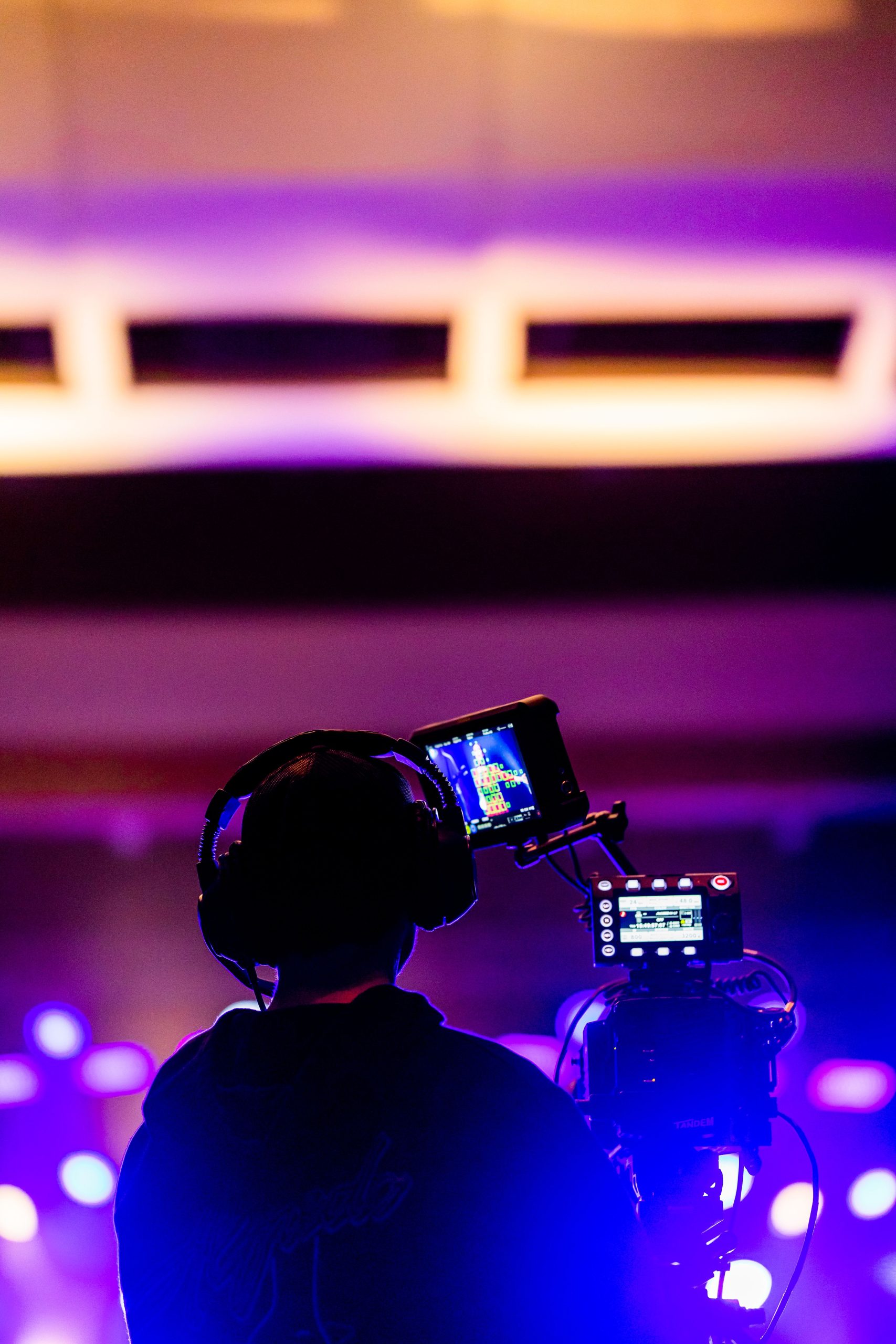
Camera technology has experienced remarkable progress as well. Modern digital cinema cameras capture extraordinary levels of detail while remaining lighter, smaller, and more versatile than previous generations. Combined with robotic camera systems, programmable motion-control rigs, and autonomous drones, filmmakers can now create complex shots with unprecedented precision and repeatability.
Motion capture continues to evolve beyond simple body tracking. Advanced facial capture systems now record subtle muscle movements and expressions with incredible accuracy, allowing digital characters to display convincing emotional performances. These systems combine computer vision, machine learning, and optical engineering to blur the line between live-action acting and digital animation.
Cloud-based collaboration has fundamentally changed film production. Large projects often involve thousands of artists, editors, engineers, and visual effects specialists working across multiple countries. Secure cloud infrastructure allows teams to share massive files, review edits, and coordinate production in real time, making global collaboration faster and more efficient than ever before.
Robotics is also playing a growing role behind the scenes. Precision robotic arms are used for repeatable camera movements, product photography, miniature effects, and high-speed cinematography. These systems enable shots that would be nearly impossible—or unsafe—for human operators while improving consistency throughout production.
Another emerging technology is volumetric capture, which records people and environments in three dimensions rather than as flat video images. This allows filmmakers to recreate performances from virtually any viewing angle and supports future applications in virtual reality, augmented reality, and interactive storytelling.
Advances in data processing are equally important. Modern productions generate enormous volumes of digital information, including raw camera footage, visual effects assets, animation files, and sound recordings. Sophisticated storage systems and high-speed networking ensure that this information can be managed securely while remaining instantly accessible to production teams around the world.
Sustainability has become another focus of technological innovation. Digital production techniques reduce the need for large physical sets, extensive travel, and material waste. Virtual environments, cloud-based workflows, and energy-efficient lighting systems help lower production costs while reducing environmental impact. As studios pursue greener operations, technology is becoming an important part of sustainable filmmaking.
Importantly, many innovations developed for film production eventually benefit other industries. Real-time visualization supports architecture and engineering, motion capture contributes to medical research and rehabilitation, virtual production influences education and industrial training, while advanced imaging technologies improve scientific visualization and product design. The relationship between filmmaking and technology is increasingly reciprocal, with discoveries flowing in both directions.
The audience may never notice most of these innovations because the goal of filmmaking technology is not to draw attention to itself. Instead, it exists to make storytelling more immersive, more believable, and more emotionally engaging. The greatest technological achievements are often invisible, seamlessly supporting the creative vision rather than overshadowing it.
Ultimately, the revolution happening behind the camera is transforming far more than movie production. It represents the convergence of science, engineering, artificial intelligence, and artistic expression into one of the world’s most technologically advanced creative industries. As new tools continue to emerge, filmmakers will gain even greater freedom to imagine worlds that were once impossible to create, ensuring that the future of cinema will be shaped as much by innovation as by imagination.
References
- Industrial Light & Magic – Virtual Production Technology
- NVIDIA – Real-Time Graphics and AI Solutions
- IEEE – Engineering and Emerging Technologies
- MIT Technology Review – Artificial Intelligence and Digital Innovation
- SIGGRAPH – Computer Graphics and Interactive Technologies
- Academy of Motion Picture Arts and Sciences – Science and Technology Council

Leave a Reply