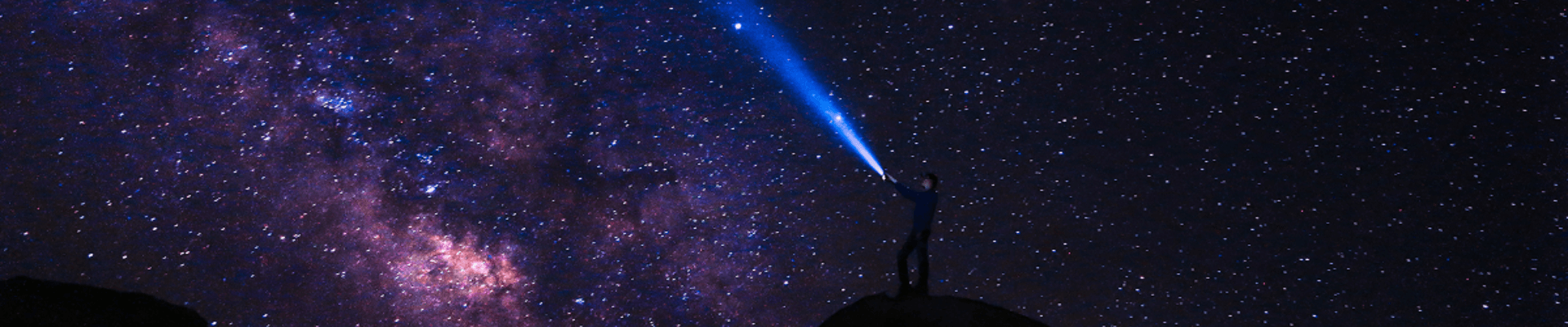


When we gaze up at the stars or admire images of distant planets and galaxies, it’s easy to forget that our own solar system is an incredibly dynamic and sometimes hostile environment, shaped by invisible forces known collectively as space weather. Unlike the weather on Earth, which affects our daily lives through wind, rain, and temperature changes, space weather involves phenomena like solar flares, coronal mass ejections (CMEs), and geomagnetic storms driven by the Sun’s activity. These forces can disrupt satellite communications, navigation systems, power grids, and even pose risks to astronauts in space. As humanity becomes increasingly dependent on space-based technologies and eyes longer-duration missions beyond Earth orbit, understanding and predicting space weather is vital for protecting critical infrastructure, ensuring astronaut safety, and preparing for the next phase of space exploration. This emerging field, at the crossroads of astrophysics, space science, and engineering, reveals the complex interactions between solar emissions, Earth’s magnetic field, and our planet’s atmosphere — a cosmic dance that impacts not only space missions but life on Earth itself.
At the heart of space weather phenomena is the Sun, a colossal fusion reactor whose magnetic activity waxes and wanes in approximately 11-year cycles, punctuated by periods of intense solar storms. Solar flares release massive bursts of electromagnetic radiation, while coronal mass ejections hurl billions of tons of charged particles into space at millions of miles per hour. When these charged particles collide with Earth’s magnetic field, they can cause geomagnetic storms that induce electrical currents in the atmosphere and on the ground. Such events can have serious consequences: satellites may experience temporary outages or permanent damage, GPS signals can become unreliable, and power grids can suffer cascading failures. Historical examples include the 1859 Carrington Event, the most powerful geomagnetic storm on record, which caused widespread telegraph outages and auroras visible near the equator. More recently, in 1989, a geomagnetic storm caused a nine-hour blackout in Quebec, Canada. These events underscore the necessity of robust space weather monitoring and forecasting systems to provide early warnings, enabling operators to take protective measures. Advances in space-based observatories like the Solar and Heliospheric Observatory (SOHO) and NASA’s Parker Solar Probe, which travels closer to the Sun than any spacecraft before it, are providing unprecedented data that improve our ability to model and predict solar activity with greater accuracy and lead time.
The implications of space weather extend far beyond technological disruptions; they also raise important questions for future human spaceflight and planetary exploration. Astronauts on the International Space Station are already exposed to higher radiation levels than people on Earth, but missions to the Moon, Mars, and beyond will confront even more severe challenges from solar radiation and cosmic rays. Developing effective shielding, early warning systems, and medical countermeasures is essential for the safety of crewed deep-space missions. Moreover, as commercial space travel becomes more viable, understanding space weather will be critical for the safety of private astronauts and passengers. On Earth, the growing reliance on satellite networks for communications, weather forecasting, financial transactions, and national security means that vulnerabilities to space weather could have cascading effects across multiple sectors. Governments and international organizations are increasingly collaborating to improve space weather preparedness, sharing data and establishing protocols to mitigate risks. Public awareness campaigns and education efforts are also important to help society understand the nature and potential impacts of space weather. As our cosmic environment continues to evolve and human activity in space expands, the science of space weather will remain a crucial frontier, blending observation, modeling, and technology development to safeguard the infrastructure and explorers that connect us to the wider universe.


Leave a Reply