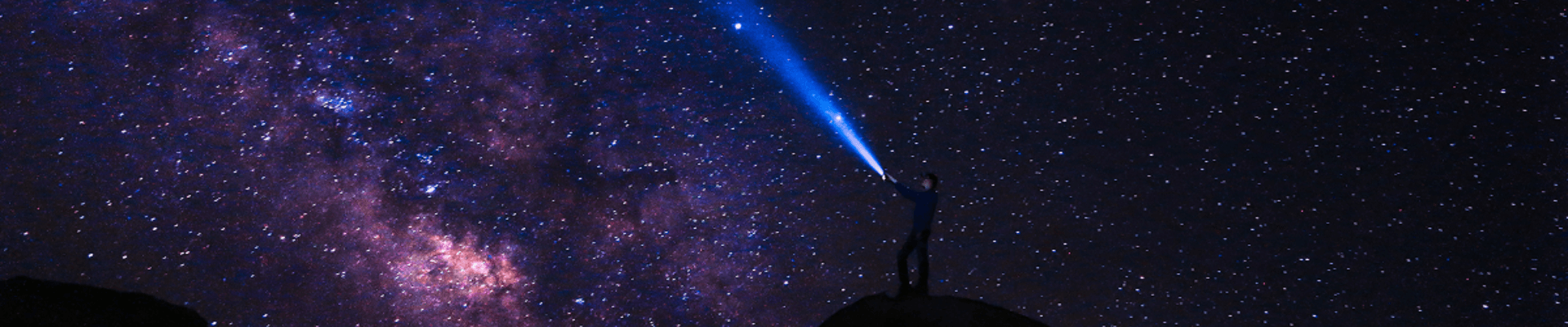


Space has fascinated humanity for millennia—a vast, mysterious expanse stretching beyond our home planet, filled with countless stars, planets, and cosmic phenomena. The study and exploration of space not only satisfy our innate curiosity but also drive technological advancements and offer profound insights into the origins of the universe, the nature of matter, and the potential for life beyond Earth.
Our solar system, with the sun at its center, contains eight planets, numerous moons, and a variety of smaller objects like asteroids and comets. Each world holds unique features that intrigue scientists. Mars, with its signs of ancient water flows, raises questions about past life. The gas giants like Jupiter and Saturn boast complex atmospheres and intriguing moons, such as Europa and Enceladus, which may harbor subsurface oceans capable of supporting life.
Beyond our solar system lies the vastness of interstellar space and distant galaxies, home to billions of stars and exoplanets. The discovery of thousands of exoplanets orbiting other stars has transformed our understanding of the cosmos and expanded the possibilities for habitable worlds. Instruments like the Kepler Space Telescope and the recently launched James Webb Space Telescope have revolutionized our ability to detect and analyze these distant planets.
Space exploration has evolved from early satellite launches and moon landings to ambitious plans for Mars colonization, asteroid mining, and even interstellar probes. Robotic spacecraft, like the Mars rovers and the Voyager probes, have traveled billions of miles, sending back invaluable data about planetary surfaces, atmospheres, and magnetic fields. The International Space Station (ISS) serves as a laboratory for experiments that cannot be conducted on Earth, advancing medicine, materials science, and biology.
The technology developed for space missions often finds applications here on Earth. Satellite communications underpin global internet and GPS systems, while innovations in materials and robotics improve industries from healthcare to manufacturing. Space exploration also inspires STEM education, encouraging the next generation of scientists and engineers.
Understanding the challenges of space travel—such as microgravity effects on the human body, radiation exposure, and life support sustainability—is crucial for future missions. Researchers study how to grow food in space, recycle air and water, and protect astronauts during long journeys. These studies not only prepare us for missions to Mars and beyond but also offer insights into improving life on Earth.
Astronomy, the science of observing celestial objects, continues to push the boundaries of knowledge. Observatories on Earth and in space collect light from distant stars, black holes, and galaxies, helping to unravel the universe’s history. Phenomena like dark matter, dark energy, and gravitational waves present new puzzles that challenge our understanding of physics.
Space also holds a special place in human culture and imagination, inspiring art, literature, and philosophy. It symbolizes the spirit of exploration and the quest for knowledge, reminding us of our small but unique place in the cosmos.
In conclusion, space remains the ultimate frontier—vast, beautiful, and full of mysteries waiting to be solved. Through exploration and scientific discovery, humanity continues to expand its horizons, driven by curiosity and the desire to understand the universe and ourselves. The journey into space promises to reshape our future in ways we can only begin to imagine.



Leave a Reply