
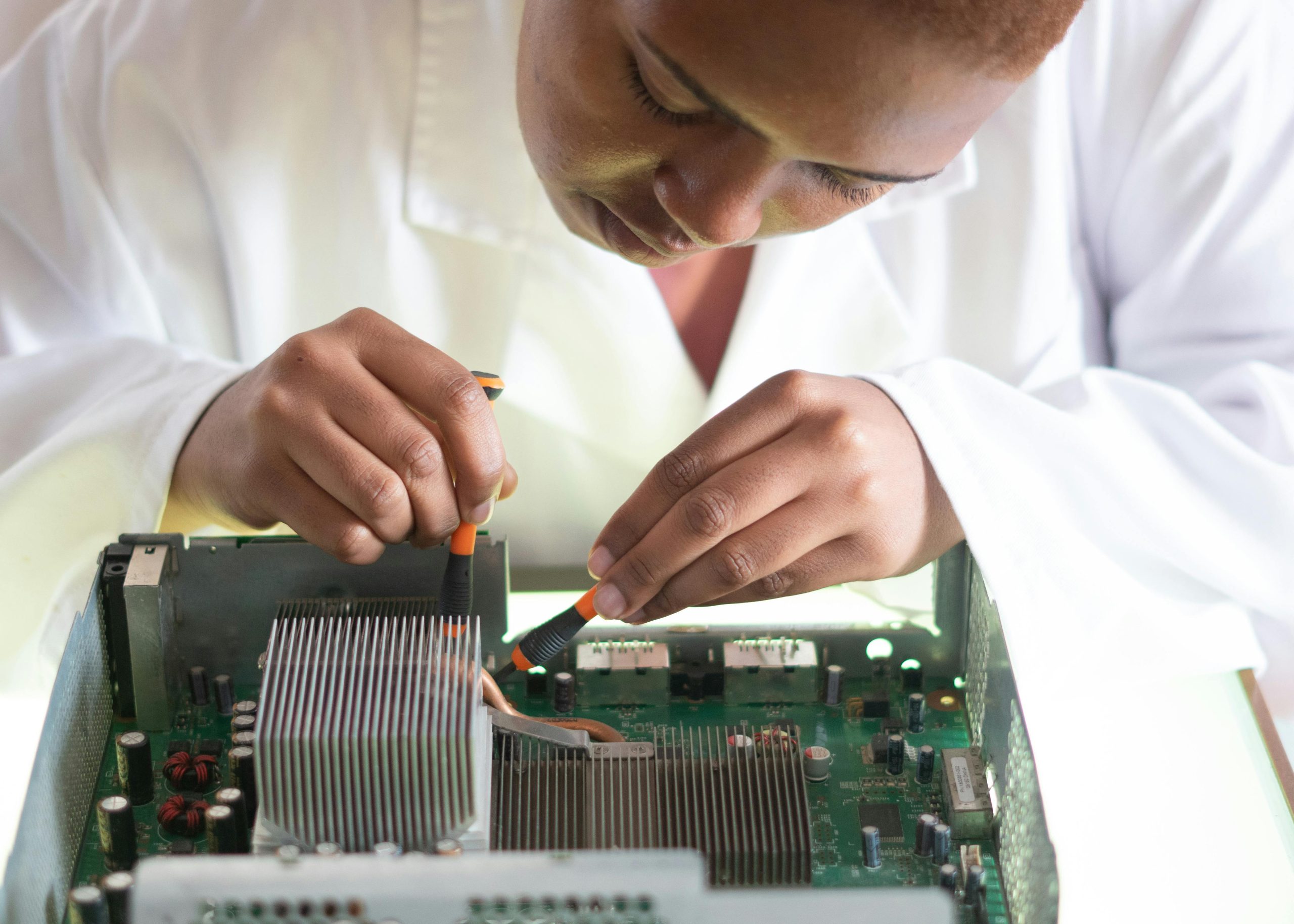

The pace of scientific discovery and technological advancement is staggering. Every year brings breakthroughs that redefine our understanding of the world and open possibilities once thought to be science fiction. From artificial intelligence and biotechnology to renewable energy and space exploration, the innovations of today are shaping the society, economy, and culture of tomorrow. What makes this era particularly remarkable is the convergence of multiple fields—computing, biology, materials science, and engineering—working together to solve complex problems faster than ever before.
Quantum computing is one of the most exciting frontiers. Unlike classical computers, which process information in binary bits, quantum computers use qubits capable of representing multiple states simultaneously. This allows them to tackle problems far beyond the reach of conventional computing, from complex simulations in chemistry and physics to optimized logistics for industries. As companies and research institutions develop practical quantum systems, fields like cryptography, climate modeling, and pharmaceutical research are poised for transformation.
Advances in materials science are also fueling technological leaps. Scientists are designing materials with properties that can be precisely controlled, enabling everything from ultra-lightweight, super-strong composites to flexible electronics and self-healing surfaces. These innovations are influencing industries ranging from construction and transportation to wearable tech and medical devices. Materials that were once theoretical are now entering real-world applications, pushing the boundaries of what devices and infrastructure can achieve.
The intersection of biology and technology is another area of rapid change. Synthetic biology and gene editing tools like CRISPR are allowing researchers to modify organisms with unprecedented precision. These techniques are being used to engineer crops that withstand climate stress, develop therapies for genetic diseases, and create sustainable biofuels. Biotechnology is no longer confined to laboratories; it is increasingly integrated into agriculture, manufacturing, and healthcare, offering solutions that could address some of the planet’s most pressing challenges.
Neuroscience and human-computer interfaces are opening doors to new forms of communication and cognitive enhancement. Brain-computer interfaces (BCIs) are being developed to assist individuals with disabilities, control devices through thought alone, and even explore ways to enhance learning or memory. While these technologies are still in their infancy, they highlight the potential for science to redefine the interaction between humans and machines, and ultimately, the boundaries of human capability.
Energy innovation continues to be critical for global sustainability. Beyond solar and wind, emerging technologies like nuclear fusion, advanced batteries, and grid-scale energy storage are changing how electricity is generated, stored, and distributed. These solutions are crucial not only for reducing carbon emissions but also for ensuring energy access and resilience in rapidly growing urban centers. Science and engineering are working hand-in-hand to create energy systems that are cleaner, more reliable, and smarter.
Transportation and mobility are undergoing parallel transformations. Electric vehicles are now mainstream, while autonomous driving technology promises to make travel safer and more efficient. Hyperloop concepts, drone delivery, and next-generation aircraft suggest a future where movement is faster, greener, and more interconnected than ever. These advances rely on the integration of sensors, AI, and new materials, illustrating how interdisciplinary innovation drives practical improvements in everyday life.
Data science and predictive analytics are reshaping decision-making across industries. From healthcare to finance to environmental management, the ability to process vast datasets, identify patterns, and forecast outcomes is enabling smarter choices. Predictive models can anticipate disease outbreaks, optimize supply chains, or improve city planning. Technology is turning information into actionable insights, fundamentally changing how problems are approached and solved.
Emerging technologies also bring ethical considerations to the forefront. Questions about privacy, AI bias, genetic modification, and environmental impact are more relevant than ever. As science and technology advance, society must consider not only what can be done, but what should be done. Policy, regulation, and ethical frameworks will play a critical role in ensuring that innovation benefits humanity as a whole rather than creating unintended consequences or inequalities.
Education and accessibility are evolving alongside technological growth. Online learning platforms, virtual labs, and interactive simulations are democratizing knowledge, allowing people worldwide to access scientific resources and technical training. This expanded access accelerates innovation itself, as more minds contribute to solving complex challenges and generating new ideas. Science and technology are no longer the exclusive domain of experts—they are becoming a collaborative, global endeavor.
In the next decade, we are likely to see even more dramatic intersections between fields: AI-guided drug discovery, bioengineered materials for space travel, decentralized energy grids powered by smart networks, and immersive virtual environments that enhance education and collaboration. The possibilities are vast, and the speed of progress suggests that solutions to longstanding problems—disease, energy scarcity, environmental degradation—may arrive sooner than expected.
Ultimately, science and technology are tools for understanding and shaping the world. They amplify human creativity, extend physical and cognitive capabilities, and create opportunities for a more connected, sustainable, and informed society. The challenge is to balance innovation with responsibility, curiosity with foresight, and capability with ethics. Those who embrace this balance will be best positioned to navigate and shape the future.
Every discovery and invention is part of a larger story—one that demonstrates the limitless potential of human ingenuity when guided by knowledge, collaboration, and imagination. As science and technology continue to evolve, they offer not just new solutions, but new ways of thinking, new perspectives on the world, and new opportunities to enhance life in ways previously unimaginable. The future is not only being discovered—it is being created.
Leave a Reply