
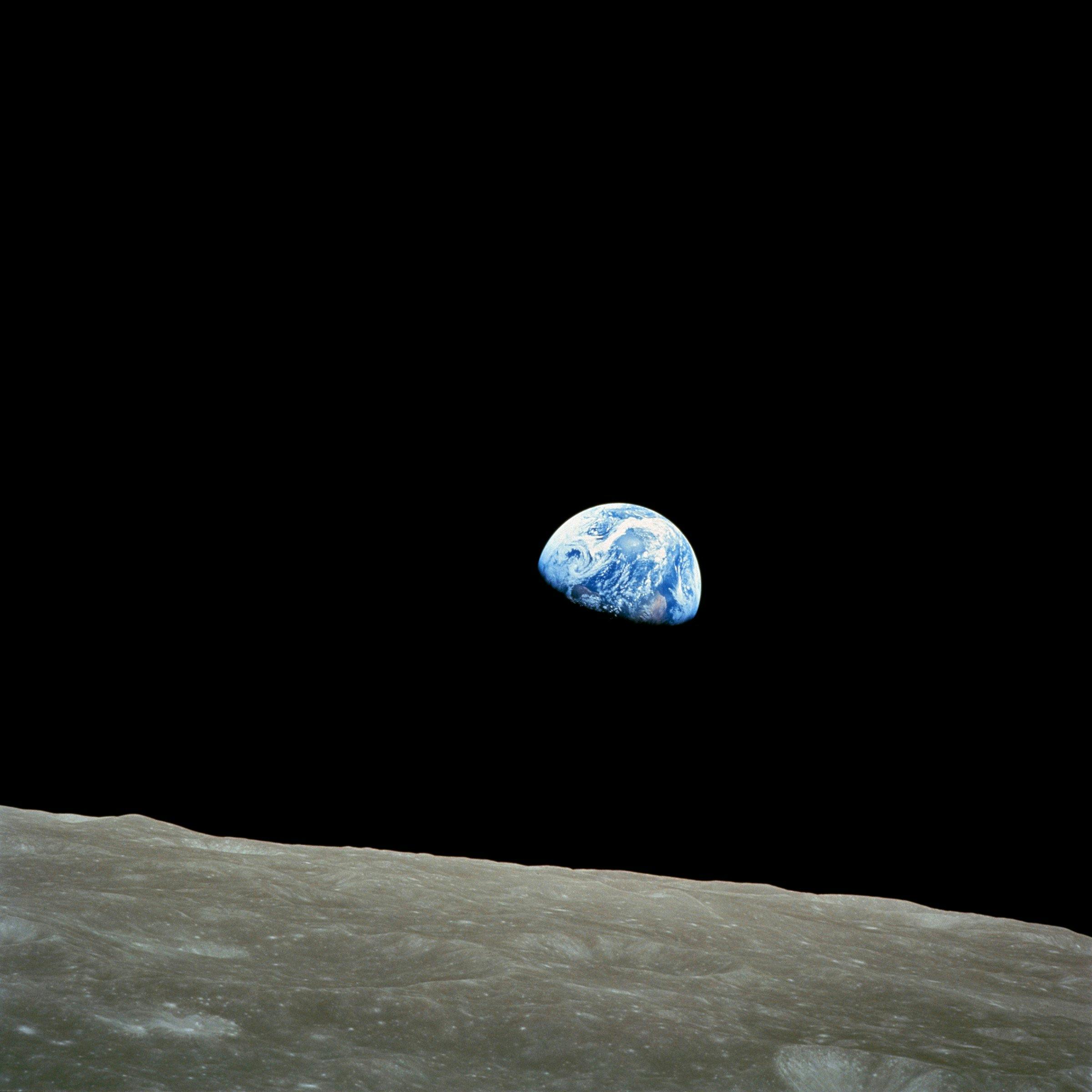

Humanity lives on a small planet orbiting an ordinary star in an unremarkable corner of a vast galaxy. This fact, once shocking, is now scientifically accepted, yet its emotional weight has not diminished. Space has a way of humbling those who study it. The more humans learn about the universe, the clearer it becomes that existence is far larger, older, and more complex than anything imagined before. And yet, despite this humbling scale, humans continue to explore space—not out of arrogance, but out of a deep need to understand where they fit within it.
For most of human history, the sky was both a mystery and a guide. The movement of stars helped early societies track time and seasons. The Sun dictated survival, while eclipses inspired fear and reverence. Without knowing it, early astronomers were already practicing science, searching for patterns and meaning in the heavens. Space was not separate from life on Earth; it shaped it.
The realization that Earth is not the center of the universe fundamentally altered human thought. When scientists demonstrated that planets orbit the Sun and that the Sun itself is one among billions of stars, humanity lost its privileged position. This loss, however, was also a gain. It replaced illusion with understanding and mythology with inquiry. Space became something to study rather than worship, though the sense of awe never disappeared.
Modern space exploration represents one of humanity’s most ambitious endeavors. Sending machines—and eventually people—beyond Earth requires solving problems that test the limits of physics, engineering, and biology. Spacecraft must survive extreme temperatures, radiation, and vast distances. Communication delays stretch from seconds to hours. Every successful mission is the result of years of planning, collaboration, and persistence.
Despite the difficulty, space exploration continues because its rewards are profound. Space allows humans to look backward in time. Telescopes capture light that has traveled across the universe for billions of years, offering glimpses into the early stages of cosmic evolution. By studying distant galaxies, scientists learn how matter formed, how stars ignited, and how structure emerged from chaos. Space reveals not just where the universe is going, but where it began.
Space also forces humans to reconsider the uniqueness of Earth. Discoveries of planets beyond the solar system suggest that planetary systems are common. Many of these worlds exist in regions where liquid water could exist, raising the possibility that life may be widespread. This does not diminish Earth’s importance; it heightens it. Earth may not be unique in form, but it is unique in familiarity. It is the only place known to support life, and that knowledge carries responsibility.
The search for extraterrestrial life is one of the most compelling aspects of space science. Finding life elsewhere would reshape philosophy, religion, and science. It would suggest that life is not a rare miracle, but a natural outcome of cosmic conditions. At the same time, the ongoing silence raises equally powerful questions. If the universe is so vast, why does it seem so quiet? The absence of clear signals invites reflection on the fragility and impermanence of civilizations.
Space exploration also reveals the vulnerability of human existence. Earth’s atmosphere, magnetic field, and distance from the Sun create a narrow window in which life can thrive. From space, these protective layers appear thin and fragile. This perspective emphasizes how easily planetary systems can be disrupted. Studying space hazards such as asteroids, solar storms, and cosmic radiation is not only scientific curiosity—it is planetary defense.
Space technology plays an essential role in modern life. Satellites support communication, navigation, climate monitoring, and disaster response. Space-based observation helps scientists track environmental changes, predict weather patterns, and understand Earth’s complex systems. Though space may feel distant, its influence is woven into daily routines across the globe.
The experience of seeing Earth from space has profoundly affected astronauts. Many describe a shift in perspective—a sudden awareness of planetary unity. National borders disappear, conflicts seem insignificant, and Earth appears as a shared home rather than divided territory. This psychological effect highlights space’s ability to change not just knowledge, but values. It encourages cooperation, stewardship, and long-term thinking.
The future of space exploration is evolving. Private companies now play a major role, developing reusable rockets and ambitious plans for space travel. This shift increases access and innovation but also raises important questions. Who governs space activity? Who owns resources extracted from other worlds? How can exploration be conducted responsibly without repeating mistakes made on Earth? These questions require ethical frameworks as advanced as the technology itself.
Mars remains a focal point of future exploration. It represents both hope and warning—a planet that may once have been habitable, but no longer is. Studying Mars helps scientists understand planetary climate change and atmospheric loss. Human missions to Mars, while inspiring, demand serious consideration of risk, sustainability, and purpose. Reaching another planet is not the same as thriving on one.
Space also reshapes humanity’s relationship with time. Human lives are brief compared to cosmic processes. Stars burn for billions of years, galaxies evolve over unimaginable timescales, and the universe itself is still expanding. This contrast can feel insignificant, but it also gives meaning to awareness. Conscious beings capable of understanding the universe are rare, at least as far as humans know. That awareness itself becomes valuable.
Space exploration encourages patience. Missions can take decades from planning to completion. Discoveries often come slowly, requiring careful interpretation. This long-term mindset contrasts sharply with a culture of instant results. Space reminds humanity that progress is not always immediate, but it is cumulative.
There is also an artistic and emotional dimension to space. Images of nebulae, planets, and galaxies inspire creativity across cultures. Space has influenced music, literature, philosophy, and visual art. It provides a shared sense of wonder that transcends language and borders. Few things unite humanity as effectively as looking up at the same sky.
Criticism of space exploration often centers on cost and practicality. Yet this perspective overlooks the deeper value of exploration. Space challenges humanity to think beyond immediate needs and consider future generations. It fosters innovation, global collaboration, and humility. It reminds humans that survival and progress are linked to understanding the environment beyond Earth.
Ultimately, space is not about escape. It is about context. By studying space, humans learn more about their own planet, their origins, and their future. Space does not diminish human importance; it reframes it. In a vast universe, meaning is not granted by size or dominance, but by awareness and responsibility.
Humanity’s story is still young on a cosmic scale. Whether humans remain bound to one planet or expand cautiously into the solar system, space will continue to shape imagination and inquiry. It will continue to humble, challenge, and inspire.
A small planet in a very old universe may seem insignificant, but it is home to beings capable of curiosity, reflection, and hope. And as long as humans continue to ask questions—about stars, origins, and destiny—they will keep looking outward, not to conquer the universe, but to understand their place within it.



Leave a Reply