
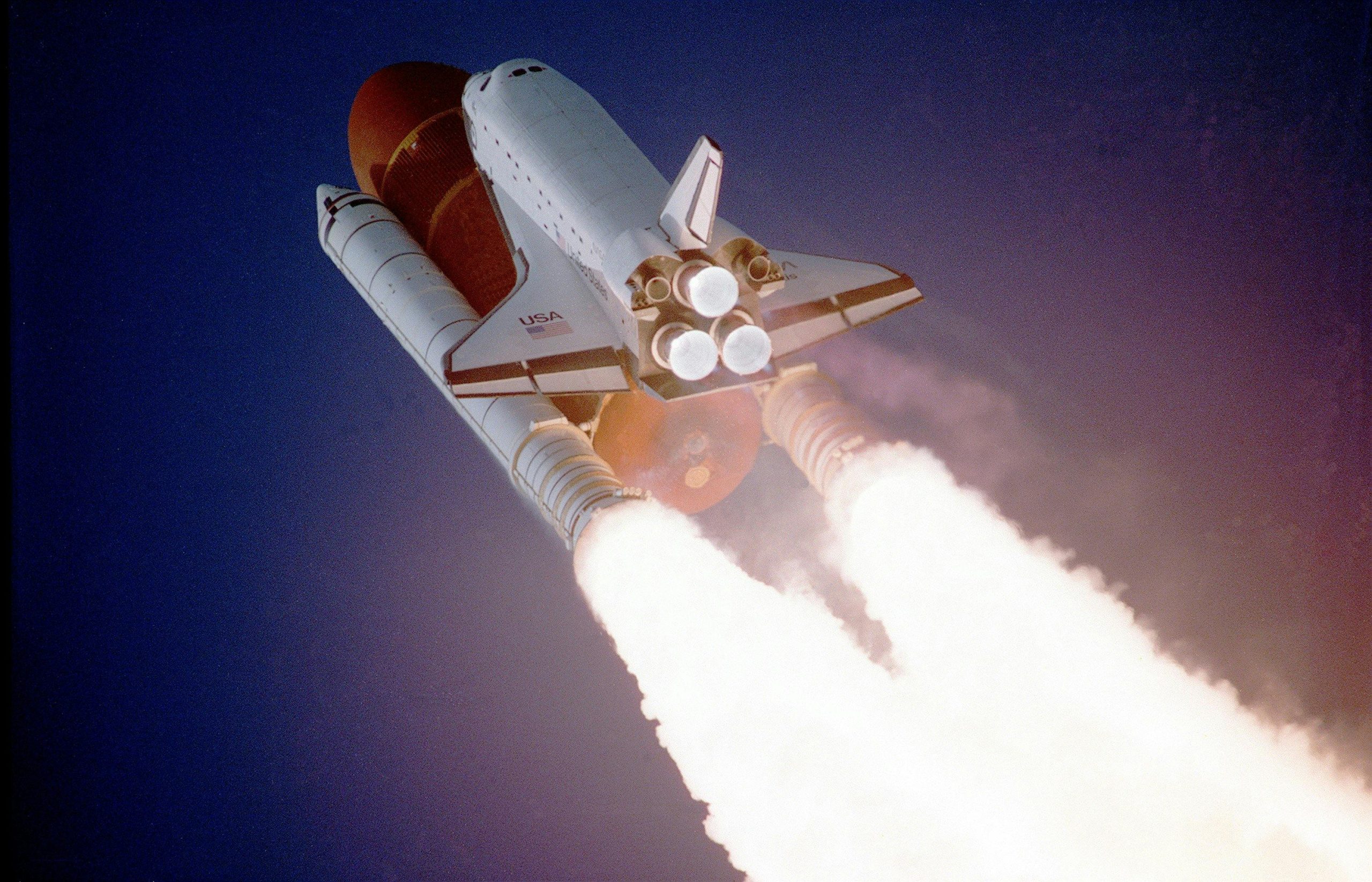

Space has fascinated humanity since the dawn of civilization. Long before telescopes, rockets, or satellites existed, people looked up at the night sky and wondered what lay beyond the stars. Ancient cultures built myths around constellations, used the movement of celestial bodies to track time, and believed the heavens held divine meaning. Even today, despite extraordinary scientific progress, space continues to inspire awe, curiosity, and profound questions about existence. It represents both our greatest scientific challenge and our deepest philosophical mystery—a vast, seemingly infinite realm that reminds us how small yet how capable humanity truly is.
At its most basic level, space is the expanse beyond Earth’s atmosphere, a near-perfect vacuum filled with galaxies, stars, planets, asteroids, comets, radiation, and dark matter. Yet this simple definition barely captures its complexity. Space is not empty; it is dynamic, constantly evolving, shaped by gravity, energy, and time itself. The universe is estimated to be about 13.8 billion years old, originating from the Big Bang, an event that marked the beginning of space, time, and matter. Since then, the universe has been expanding, forming vast cosmic structures that stretch beyond human comprehension.
Early Human Understanding of Space
Human engagement with space began with observation rather than exploration. Early astronomers in civilizations such as Mesopotamia, Egypt, India, China, and Greece meticulously studied the sky. They charted the movement of the Sun, Moon, and planets, creating calendars that guided agriculture, religious rituals, and navigation. The stars were not merely points of light but tools for survival and symbols of meaning. For sailors, constellations like the North Star served as guides across unknown oceans. For farmers, the changing positions of stars marked the seasons.
The shift from mythological explanations to scientific inquiry was gradual. Figures such as Copernicus, Galileo, and Kepler revolutionized humanity’s understanding of the cosmos by demonstrating that Earth was not the center of the universe. Galileo’s use of the telescope in the 17th century revealed moons orbiting Jupiter and craters on the Moon, proving that celestial bodies were not perfect, unchanging spheres as once believed. These discoveries fundamentally altered humanity’s perception of space and our place within it, laying the foundation for modern astronomy.
The Birth of Space Exploration
While observation dominated early space science, the 20th century marked a dramatic turning point: humanity began to physically reach beyond Earth. The launch of Sputnik 1 by the Soviet Union in 1957 became the first artificial satellite to orbit Earth, signaling the start of the Space Age. This achievement was not just technological; it was symbolic, demonstrating that humans could overcome Earth’s gravitational pull and venture into space.
Soon after, space exploration accelerated rapidly, driven by scientific ambition, political competition, and national pride. The space race between the United States and the Soviet Union led to remarkable achievements in a short period of time. In 1961, Yuri Gagarin became the first human to orbit Earth, proving that space travel was possible for humans. Less than a decade later, in 1969, NASA’s Apollo 11 mission successfully landed astronauts Neil Armstrong and Buzz Aldrin on the Moon. Armstrong’s famous words, “That’s one small step for man, one giant leap for mankind,” captured the significance of this moment for all of humanity.
The Moon landing demonstrated that space exploration was not just a dream but a tangible reality. It showcased the power of human ingenuity, collaboration, and perseverance. Beyond its symbolic importance, the mission generated scientific data that deepened our understanding of the Moon’s formation and Earth’s early history.
Expanding the Reach: Robotic Exploration
While human spaceflight captures public imagination, robotic missions have played an equally vital role in exploring space. Unmanned spacecraft can travel farther, remain operational longer, and withstand extreme environments that would be dangerous or impossible for humans. Probes like Voyager 1 and Voyager 2, launched in 1977, have traveled beyond the outer planets and into interstellar space, carrying messages from Earth in the form of the Golden Record—a time capsule intended for any intelligent life that might encounter it.
Robotic missions have transformed our understanding of the solar system. Mars rovers such as Spirit, Opportunity, Curiosity, and Perseverance have explored the Martian surface, providing evidence that Mars once had liquid water and conditions potentially suitable for life. Probes sent to Jupiter and Saturn have revealed complex systems of moons, some of which—like Europa and Enceladus—may harbor subsurface oceans beneath icy crusts. These discoveries have expanded the search for life beyond Earth, suggesting that habitable environments may exist in places once considered unlikely.
Space telescopes have also revolutionized astronomy. The Hubble Space Telescope, launched in 1990, has captured breathtaking images of distant galaxies, nebulae, and star-forming regions, allowing scientists to observe the universe with unprecedented clarity. More recently, advanced telescopes have enabled researchers to study exoplanets—planets orbiting stars beyond our solar system—analyzing their atmospheres for signs of habitability.
The International Space Station and Human Life in Space
One of the most significant achievements in space exploration is the International Space Station (ISS). Orbiting Earth at an altitude of approximately 400 kilometers, the ISS serves as a symbol of international cooperation, bringing together space agencies from multiple countries. It functions as a floating laboratory where astronauts conduct experiments in microgravity, advancing knowledge in fields such as biology, physics, medicine, and materials science.
Living and working in space presents unique challenges. Astronauts must adapt to microgravity, which affects muscle strength, bone density, and fluid distribution in the body. Studying these effects is crucial not only for astronaut health but also for understanding human physiology and developing treatments for conditions like osteoporosis. The ISS has also contributed to technological innovations, many of which have applications on Earth, including improvements in water purification, medical imaging, and remote monitoring systems.
Space and Its Impact on Everyday Life
Although space exploration may seem distant from everyday concerns, its influence on daily life is profound. Satellites orbiting Earth enable global communication, television broadcasting, internet connectivity, and GPS navigation. Weather satellites help predict storms, monitor climate change, and support disaster response efforts. Earth-observing satellites provide critical data for agriculture, urban planning, and environmental conservation.
Medical technologies have also benefited from space research. Techniques developed to monitor astronauts’ health have been adapted for use in hospitals, while materials designed for spacecraft have found applications in prosthetics, insulation, and protective equipment. In this way, space exploration not only expands human knowledge but also improves quality of life on Earth.
The Search for Life Beyond Earth
One of the most compelling questions driving space exploration is whether life exists elsewhere in the universe. Given the vast number of galaxies and stars, many scientists believe it is statistically likely that life exists beyond Earth, even if it is microbial. The discovery of exoplanets in habitable zones—regions around stars where liquid water could exist—has intensified this search.
Mars remains a key focus in the search for past or present life. Evidence of ancient riverbeds, lakes, and organic molecules suggests that Mars may once have supported microbial life. Missions continue to analyze Martian soil and rocks, searching for biosignatures that could indicate biological activity. Beyond Mars, icy moons such as Europa and Enceladus are considered promising candidates due to their subsurface oceans and potential energy sources.
The discovery of extraterrestrial life, even in its simplest form, would have profound implications for science, philosophy, and religion. It would challenge humanity’s understanding of life’s uniqueness and our place in the cosmos.
The Role of Private Space Companies
In recent years, space exploration has entered a new era with the rise of private space companies. Organizations such as SpaceX, Blue Origin, and others have introduced reusable rockets, significantly reducing the cost of launching payloads into space. This shift has increased access to space, enabling more frequent missions and opening opportunities for scientific research, commercial ventures, and even space tourism.
Private companies are also playing a role in ambitious plans for the future, including establishing a sustained human presence on the Moon and eventually sending humans to Mars. These goals represent not only technological challenges but also questions about ethics, sustainability, and governance beyond Earth.
Challenges and Risks of Space Exploration
Despite its achievements, space exploration is not without risks and challenges. Space is an extremely hostile environment, characterized by intense radiation, extreme temperatures, and the absence of breathable air. Human missions involve significant physical and psychological risks, requiring extensive preparation and advanced life-support systems.
Space debris is another growing concern. Thousands of defunct satellites and fragments orbit Earth, posing collision risks to active spacecraft and the ISS. Managing space traffic and preventing further debris accumulation are critical challenges for the future of space operations.
Additionally, space exploration raises ethical questions. Who owns resources extracted from celestial bodies? How should humanity protect potentially habitable environments from contamination? As exploration expands, international cooperation and clear regulations will be essential to ensure responsible and peaceful use of space.
The Future of Space Exploration
Looking ahead, the future of space exploration is filled with both promise and uncertainty. Plans are underway to return humans to the Moon, not just for brief visits but to establish a long-term presence. The Moon could serve as a testing ground for technologies and strategies needed for missions to Mars and beyond.
Mars remains a central focus of long-term exploration goals. Sending humans to Mars would be one of the most ambitious endeavors in history, requiring solutions to challenges such as long-duration space travel, radiation exposure, and sustainable life-support systems. Success would mark a new chapter in human exploration, transforming humanity into a multi-planetary species.
Beyond Mars, scientists continue to explore the outer reaches of the solar system and beyond. Advances in propulsion, artificial intelligence, and robotics may one day enable missions to distant star systems, further expanding humanity’s reach into the cosmos.
Space as a Reflection of Humanity
Ultimately, space exploration is about more than technology or science—it is a reflection of humanity’s desire to explore, understand, and push beyond limitations. Space challenges us to think on cosmic timescales, to consider the fragility of our planet, and to recognize the interconnectedness of all life on Earth. Viewing Earth from space, as astronauts often describe, reveals a fragile blue planet without visible borders, emphasizing the shared responsibility of humanity to protect it.
Space reminds us that while we are small in the grand scale of the universe, we are capable of extraordinary achievements. Every mission, discovery, and image from space expands not only our scientific knowledge but also our sense of wonder and possibility.
Conclusion
Space remains one of the greatest frontiers of human exploration, filled with mystery, beauty, and endless potential. From ancient stargazers to modern astronauts and scientists, humanity’s relationship with space has evolved dramatically, yet the fundamental curiosity remains unchanged. As technology advances and exploration continues, space will undoubtedly play an even greater role in shaping our future.
Whether through scientific discovery, technological innovation, or philosophical reflection, space continues to challenge humanity to look beyond Earth and imagine what lies ahead. In exploring the universe, we are ultimately exploring ourselves—our origins, our limits, and our aspirations for the future.



Leave a Reply