
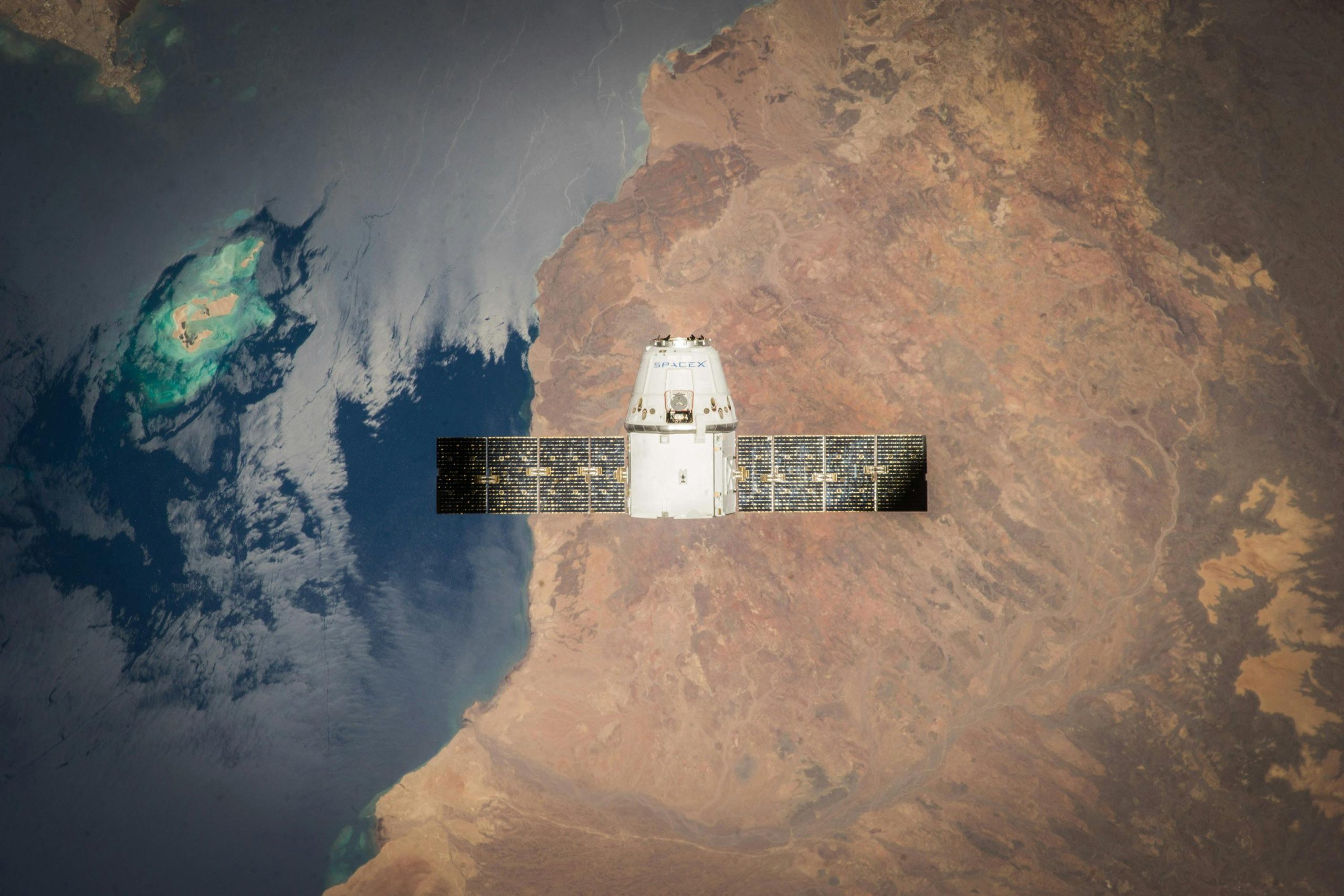

There is something deeply unsettling and endlessly fascinating about space. It does not speak, yet it answers questions humanity has asked for thousands of years. It does not move toward us, yet it pulls at our curiosity with irresistible force. Space is vast beyond comprehension, silent beyond imagination, and old beyond any sense of time humans can truly grasp. Still, despite its distance and indifference, humanity continues to look upward, driven by a desire that feels both scientific and emotional, practical and spiritual.
From the earliest civilizations, the night sky was a source of wonder and meaning. Ancient cultures mapped the stars, created constellations, and built myths around celestial movements. The stars became calendars, navigation tools, and symbols of destiny. Long before telescopes and spacecraft, humans understood that the sky was not random. The predictable patterns of planets and stars suggested an underlying order, hinting that the universe followed rules waiting to be discovered.
The invention of the telescope transformed that curiosity into discovery. Suddenly, the sky was no longer a distant ceiling but a deep landscape filled with structure and motion. Galileo’s observations challenged the belief that Earth was the center of everything, forcing humanity to confront a humbling truth: the universe does not revolve around us. This realization marked a turning point, not just in science, but in how humans understood their place in existence.
As technology advanced, so did humanity’s reach into space. Rockets allowed us to break free from Earth’s gravity, and satellites extended human vision beyond the atmosphere. The first steps on the Moon were more than a technological achievement; they were a statement of intent. Humanity was no longer confined to one world. Space was no longer only something to observe—it was something to explore.
Yet space remains profoundly hostile. It offers no air to breathe, no protection from radiation, and temperatures that swing between extremes. Every venture beyond Earth requires careful planning, immense resources, and acceptance of risk. This raises a question that persists across generations: why do we keep going? Why invest so much effort into exploring a place that seems so indifferent to our survival?
Part of the answer lies in knowledge. Space is a natural laboratory that reveals the fundamental laws of reality. By studying stars, galaxies, and cosmic radiation, scientists learn how matter behaves under extreme conditions. Observations of distant galaxies show us what the universe looked like billions of years ago, allowing us to trace cosmic history almost back to its beginning. Space is not just far away; it is a window into time itself.
Another reason is survival. Earth, while resilient, is not permanent. Asteroids, solar activity, climate shifts, and long-term planetary changes pose existential risks. Understanding space helps humanity identify threats and develop strategies to mitigate them. Monitoring near-Earth objects, studying planetary climates, and learning how to live beyond Earth are not acts of escapism, but preparations for longevity as a species.
Space exploration has also reshaped daily life in subtle ways. Technologies developed for space missions often find their way into everyday use. Satellite communication enables global connectivity. GPS systems guide transportation and logistics. Weather forecasting, disaster monitoring, and environmental analysis all rely on space-based observation. Even medical technologies and materials science have benefited from research conducted in microgravity. Space, though distant, influences life on Earth more than most people realize.
Beyond practicality, space touches something deeper. It forces humanity to confront scale. When viewed from orbit, Earth appears fragile—a small, blue sphere suspended in darkness. Borders vanish, conflicts seem trivial, and divisions lose their sharpness. This perspective, often described by astronauts as the “overview effect,” has the power to change how people think about responsibility, cooperation, and stewardship of the planet.
The search for life beyond Earth adds another layer of meaning to space exploration. Humans have long wondered whether they are alone in the universe. Advances in astronomy have revealed thousands of exoplanets orbiting distant stars, many of them in conditions that could support life. Robotic missions explore Mars, icy moons, and distant asteroids, searching for chemical signatures or environments where life might exist or might have existed in the past.
The discovery of extraterrestrial life, even in its simplest form, would fundamentally alter humanity’s understanding of itself. It would suggest that life is not a rare accident, but a natural outcome of cosmic processes. At the same time, the silence encountered so far raises unsettling possibilities. Perhaps intelligent life is rare. Perhaps civilizations destroy themselves before reaching the stars. Or perhaps the universe is vast enough that contact is simply unlikely. Each possibility carries profound implications.
Modern space exploration is also changing in structure. What was once the domain of governments is now shared with private companies. Commercial launch systems, reusable rockets, and ambitious plans for space tourism and planetary colonization reflect a shift in how humanity approaches space. This commercialization accelerates innovation but also introduces new ethical and legal questions. Who owns space resources? Who is responsible for protecting celestial environments? How should access be regulated?
Mars, in particular, has captured the imagination of scientists and the public alike. It represents both a scientific mystery and a potential future home. Robotic explorers have revealed a planet that once had liquid water, suggesting it may have supported life. Plans for human missions raise complex challenges, from radiation exposure to psychological isolation. Colonizing another planet is not just a technical challenge—it is a test of human adaptability, cooperation, and foresight.
Space also challenges human perception of time. Stars live for millions or billions of years. Galaxies collide over timescales that dwarf human history. Even the light reaching Earth from distant objects may have begun its journey long before humans existed. This cosmic timeline makes human concerns feel fleeting, yet it also highlights the rarity of consciousness capable of understanding the universe at all.
Despite its silence, space is not empty. It is filled with energy, motion, and unseen forces. Dark matter and dark energy shape the structure and expansion of the universe, yet remain largely mysterious. Black holes bend space and time to extremes that challenge existing physics. These phenomena push the limits of human understanding, reminding us that knowledge is always incomplete and discovery never finished.
Space exploration is often criticized as expensive or impractical, especially in a world facing urgent problems on Earth. Yet this view assumes a false choice. The pursuit of space does not negate the need to solve terrestrial challenges; it complements it. Space science improves climate modeling, resource management, and global communication. More importantly, it nurtures a mindset of long-term thinking, collaboration, and curiosity—qualities essential for addressing complex global issues.
At its heart, the fascination with space is a reflection of humanity’s desire to understand. Humans are meaning-seeking beings, driven to ask where they came from and where they are going. Space offers clues to both questions. By studying the universe’s origins, we learn about the forces that shaped everything, including ourselves. By exploring its future, we consider our own.
The silence of space is not emptiness; it is invitation. It invites humility, reminding us that we are small. It invites ambition, challenging us to go beyond what seems possible. It invites responsibility, urging us to care for the only home we currently have while preparing wisely for what lies beyond.
In the end, humanity does not explore space because it is easy or profitable, but because it is meaningful. Space holds answers to scientific questions, warnings about fragility, and inspiration for progress. It reflects the best of human nature: curiosity, courage, and the willingness to look into the unknown. As long as humans exist, they will look up—not because space needs us, but because we need space to understand who we are.
Leave a Reply