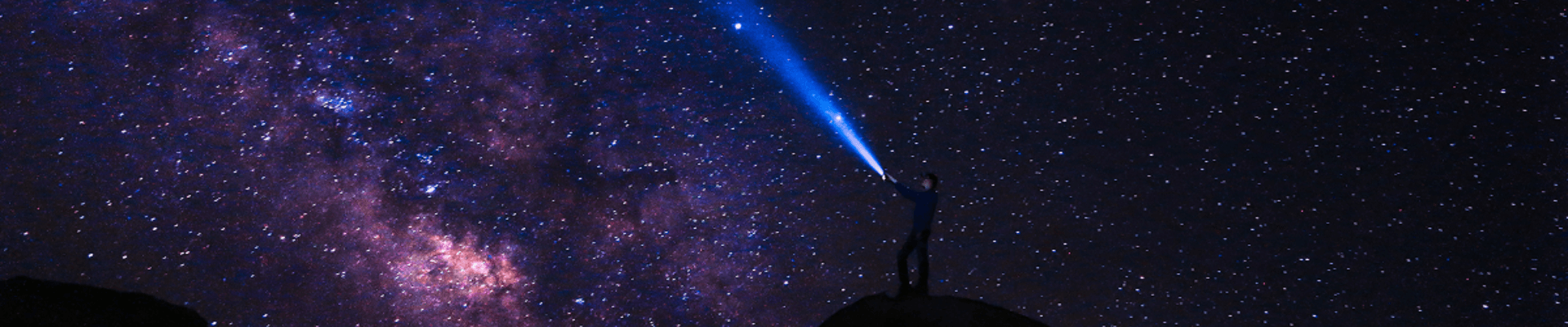
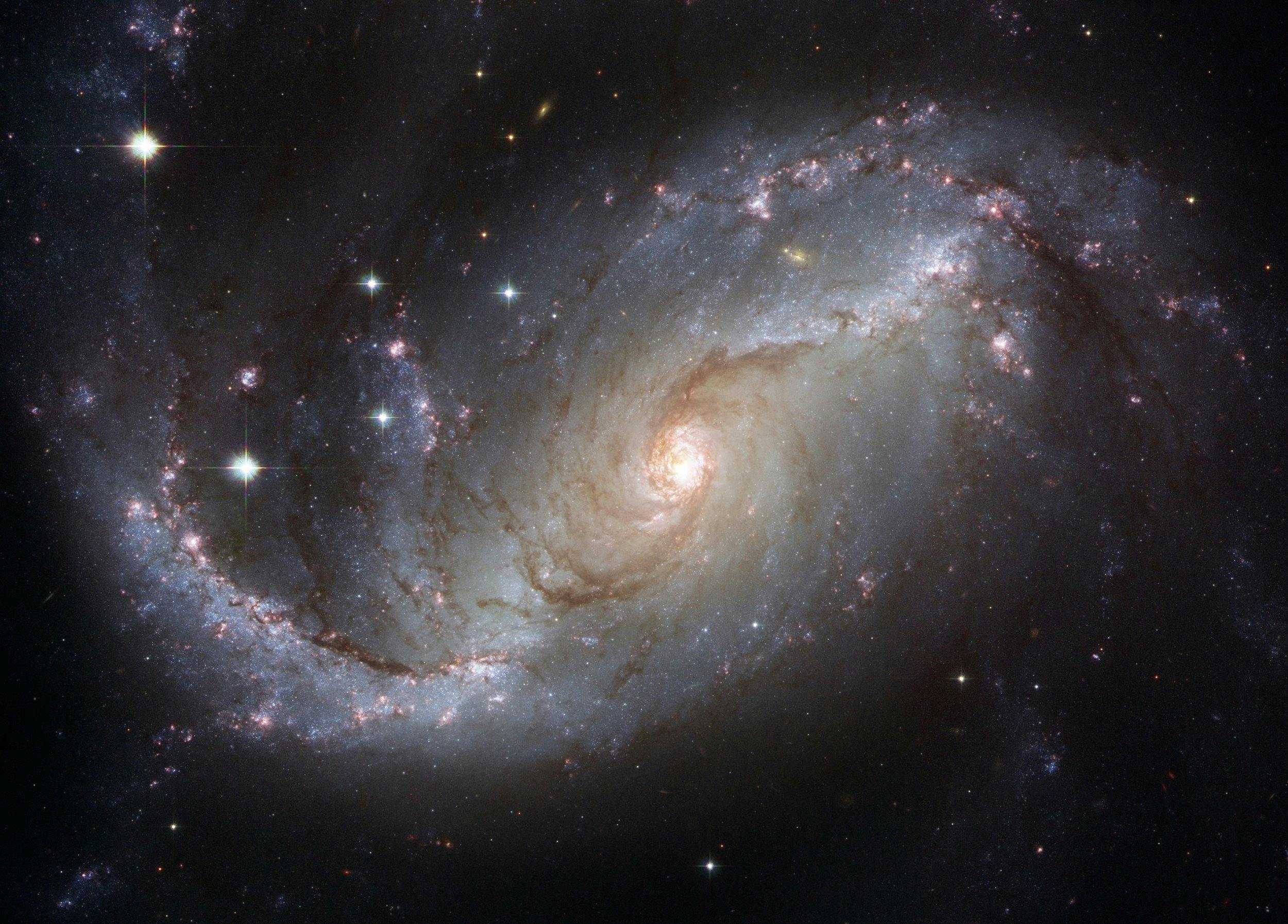

There are moments when the night sky feels less like a ceiling and more like an invitation. You step outside, look up, and suddenly the ordinary weight of the day loosens its grip. Above you stretches an ocean of darkness scattered with ancient light, a reminder that the universe is vast beyond comprehension and yet strangely intimate. Space has always had this dual power: to make us feel incredibly small and unbelievably connected at the same time. Long before telescopes, rockets, or equations, humans were telling stories about the stars, carving meaning into constellations, and wondering what lay beyond the familiar glow of the Moon. Today, even with our advanced technology and scientific understanding, that sense of wonder has not diminished. If anything, it has grown deeper, richer, and more urgent, because the more we learn about space, the more it reveals how much there still is to discover.
Space is not just a scientific subject or a distant backdrop for futuristic dreams. It is a living archive of time, a place where the past, present, and future coexist. When we look at distant galaxies, we are not seeing them as they are “now,” but as they were millions or even billions of years ago. Light takes time to travel, and space is so immense that it turns observation into time travel. Every star is a message from history, every nebula a frozen moment of cosmic creation. This realization reshapes how we think about reality itself. The universe is not a static stage; it is a dynamic, evolving story, and we are both readers and characters within it.
The Vastness That Shapes Us
The sheer scale of space is one of its most humbling qualities. Earth, with all its oceans, mountains, cities, and stories, is a tiny speck orbiting an average star in a galaxy that contains hundreds of billions of stars, which itself is just one of trillions of galaxies. Numbers like these are difficult to truly grasp. Our brains evolved to understand distances measured in footsteps or days of travel, not light-years and cosmic voids. Yet, even without fully comprehending the scale, we feel its emotional impact. Space challenges our sense of importance, but it does not diminish our value. Instead, it reframes it.
In the vast emptiness between stars, there is an overwhelming amount of silence. Sound cannot travel through the vacuum, and there is no familiar sense of up or down. This silence is often portrayed as cold or frightening, but it can also be deeply peaceful. It is a silence that invites reflection, stripping away distractions and leaving only fundamental questions. Who are we? Where did we come from? Are we alone? These questions are not abstract philosophical puzzles; they are deeply human concerns that shape cultures, religions, and personal identities. Space does not answer them directly, but it provides the context in which they matter.
The formation of stars and planets tells a story of transformation rather than permanence. Stars are born from clouds of gas and dust, burn brightly for millions or billions of years, and eventually die, sometimes in spectacular explosions that scatter heavy elements across space. Those elements become the building blocks for new stars, planets, and even life. The carbon in your body, the iron in your blood, and the calcium in your bones were forged in the hearts of long-dead stars. This is not poetic metaphor; it is scientific fact. We are, quite literally, made of starstuff. Space is not separate from us. It is our origin.
This cosmic perspective has a quiet way of influencing how we see our own planet. When astronauts describe the “overview effect,” they often talk about seeing Earth as a fragile blue sphere floating in darkness, without visible borders or divisions. From space, the conflicts and boundaries that dominate our daily lives vanish. What remains is a shared home, delicate and rare. Space exploration, therefore, is not just about looking outward; it is also about learning how to look back at ourselves with greater clarity and compassion.
Stories Written in Light and Gravity
Every object in space is shaped by forces that are both simple and profound. Gravity, the same force that keeps your feet on the ground, governs the motion of planets, the birth of stars, and the structure of galaxies. It bends light, warps space-time, and can even trap everything, including light itself, in the form of black holes. These invisible giants are among the most mysterious objects in the universe. Once thought to be purely theoretical, black holes are now known to be common, lurking at the centers of most galaxies, including our own Milky Way.
Black holes challenge our intuition. They are places where the laws of physics, as we currently understand them, begin to break down. Time slows near them, space curves dramatically, and familiar concepts lose their meaning. Yet, despite their fearsome reputation, black holes are not cosmic vacuum cleaners indiscriminately devouring everything around them. They are part of the natural life cycle of stars and play a role in shaping galaxies. In their extreme nature, they remind us that the universe is not obligated to conform to human expectations.
Then there are the quieter wonders: nebulae glowing softly in shades of pink, blue, and gold; planetary systems forming from swirling disks of dust; comets tracing long, elegant arcs through the inner solar system. These phenomena reveal that space is not empty in the way we might imagine. It is filled with structure, motion, and subtle beauty. Even the so-called “voids” between galaxies are rich with dark matter and faint radiation, invisible to our eyes but essential to the universe’s architecture.
Light is the primary language through which space communicates with us. Telescopes do not simply capture images; they collect photons that have traveled unimaginable distances, carrying information about their source. By analyzing light, scientists can determine a star’s temperature, composition, motion, and age. This ability to read the universe through light is one of humanity’s greatest achievements. It transforms the night sky from a decorative canopy into a detailed map of cosmic history.
At the same time, space continues to resist complete understanding. Dark matter and dark energy, which together make up the majority of the universe’s mass and energy, remain largely mysterious. We know they exist because of their effects, but we do not yet know what they are. This gap in knowledge is not a failure; it is an invitation. Space constantly reminds us that curiosity is not a problem to be solved once and for all, but a process to be embraced.
The Human Dream of Reaching Beyond
Our relationship with space changed dramatically when we first left Earth’s surface. The launch of satellites, the first human in orbit, and the Moon landings were not just technological milestones; they were psychological turning points. For the first time, humanity proved that it could step beyond its home world. These moments reshaped our sense of possibility. Space was no longer just something to observe; it became a place we could visit, explore, and eventually inhabit.
Yet space exploration has never been easy or safe. It demands precision, patience, and a willingness to confront risk. Every mission is a delicate balance between ambition and humility, a recognition that space does not bend to human will. Rockets explode, equipment fails, and the margin for error is razor-thin. And still, we persist. Why? Because exploration is woven into our nature. The same impulse that drove our ancestors across oceans and continents now drives us toward the stars.
Modern space exploration is increasingly collaborative. International space stations, shared research missions, and global scientific partnerships reflect a growing understanding that space belongs to no single nation. It is a shared frontier, one that benefits from collective effort. The data gathered from space missions informs weather forecasting, climate science, navigation, and communication, quietly shaping everyday life on Earth. Space is no longer distant from our daily routines; it is integrated into them.
The idea of living beyond Earth, once confined to science fiction, is now seriously discussed. Plans for lunar bases, missions to Mars, and even long-term space habitats raise profound questions. How do humans adapt physically and psychologically to life in reduced gravity? What ethical responsibilities come with altering other worlds? How do we carry our cultures, values, and flaws into new environments? These questions reveal that space exploration is as much about understanding ourselves as it is about understanding the cosmos.
At the same time, we must confront the reality that space is not a solution to all our problems. It cannot serve as an escape from the challenges we face on Earth. Instead, it offers perspective. It shows us what is possible when curiosity, cooperation, and creativity align. It reminds us that our planet is precious and that the skills we develop to survive in space—resource management, long-term thinking, global collaboration—are the same skills we need to thrive here.
Why Space Will Always Matter
Space matters because it stretches the boundaries of imagination. It invites us to think in terms of billions of years and unimaginable distances, expanding the mental frameworks through which we interpret existence. In doing so, it encourages humility. No matter how advanced our technology becomes, the universe remains vastly larger, older, and more complex than we are. This humility is not disempowering; it is grounding. It reminds us that knowledge is a journey, not a destination.
Space also matters because it connects science and emotion in a rare and powerful way. You can admire a photograph of a galaxy without understanding the physics behind it and still feel awe. You can study orbital mechanics and still be moved by the sight of Earth rising over the lunar horizon. This blend of logic and wonder makes space unique. It speaks to both the analytical and the poetic parts of the human mind.
Perhaps most importantly, space matters because it keeps the future open. Every discovery leads to new questions, new technologies, and new ways of thinking. Children who look up at the stars today may become the scientists, engineers, artists, and philosophers who shape tomorrow’s understanding of the universe. Space does not belong to a single generation; it is a legacy of curiosity passed down through time.
In the end, space is not just “out there.” It is woven into our stories, our science, and our sense of self. When we look up at the night sky, we are not merely observing distant objects; we are participating in a conversation that began long before we were born and will continue long after we are gone. Between the silence and the stars lies a reminder of who we are: curious, fragile, resilient beings, forever drawn to the unknown, forever reaching for the light.
Leave a Reply