
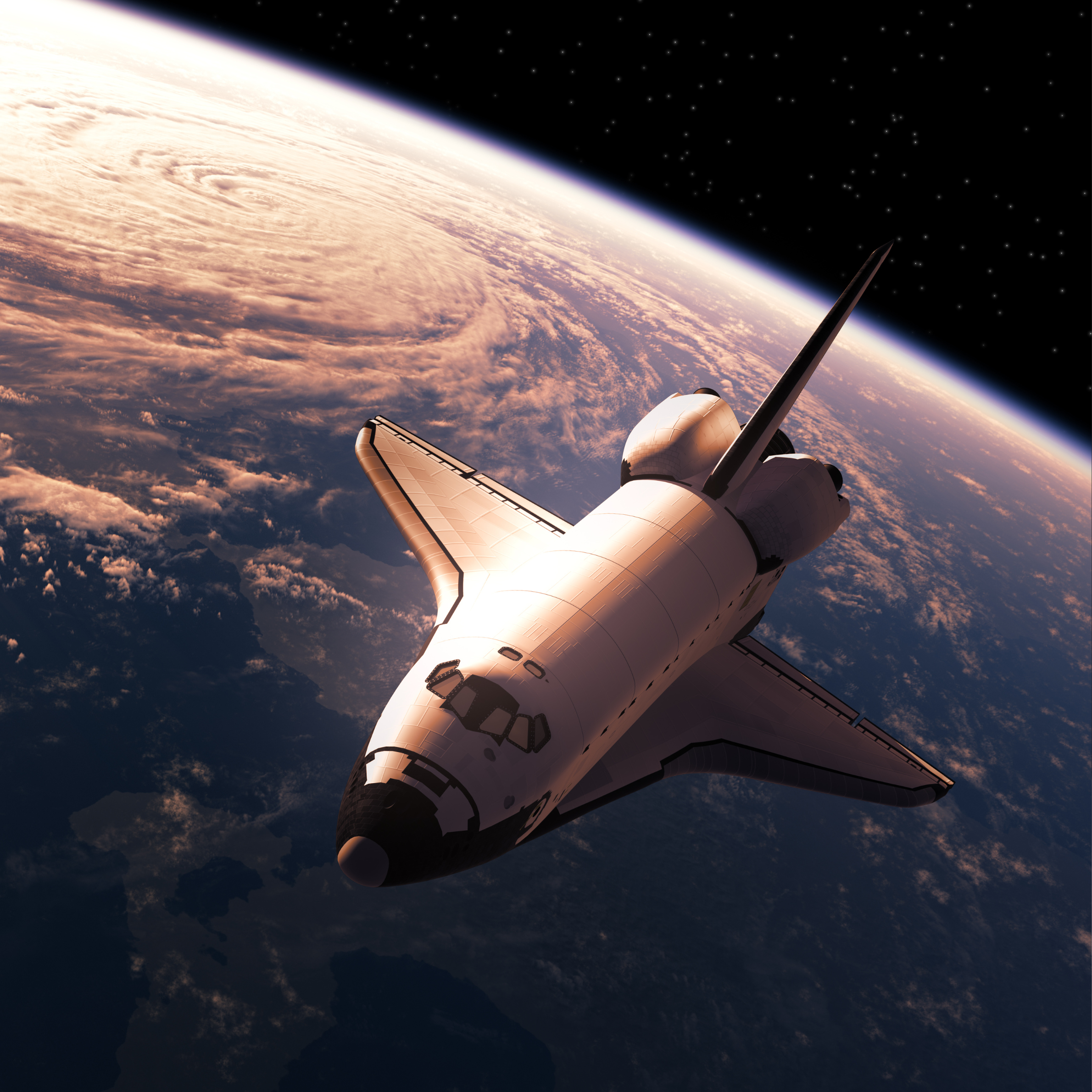

Space—the vast, seemingly infinite expanse beyond Earth’s atmosphere—has fascinated humanity for millennia. From ancient stargazers who mapped the constellations to modern scientists probing the mysteries of distant galaxies, space has been a source of wonder, inspiration, and discovery. Today, the exploration of space is no longer the realm of science fiction but a dynamic field of science and technology that is expanding our understanding of the universe and our place within it. The study of space encompasses everything from the movements of planets and stars to the search for extraterrestrial life, and the technological advancements it inspires have far-reaching implications for life on Earth.
One of the fundamental reasons space captivates us is its sheer scale and complexity. The observable universe stretches over 93 billion light-years in diameter, containing billions of galaxies, each with billions of stars and countless planets. This staggering immensity challenges our comprehension and fuels the quest to uncover how the universe began, how it evolves, and what laws govern its behavior. Cosmology, the science of the universe’s origin and development, explores concepts such as the Big Bang, dark matter, and dark energy—mysterious phenomena that shape the cosmos yet remain poorly understood. These studies push the boundaries of human knowledge, often requiring sophisticated telescopes and space probes to gather data from billions of light-years away.
Closer to home, space exploration has made remarkable strides since the mid-20th century. The Space Age began with the launch of Sputnik 1 by the Soviet Union in 1957, the first artificial satellite to orbit Earth. This milestone sparked a competitive era of space missions, culminating in the Apollo program’s historic 1969 Moon landing, when humans first set foot on another celestial body. Since then, numerous robotic missions have explored the Moon, Mars, Venus, and other planets, sending back invaluable information about their geology, atmosphere, and potential for life. The Hubble Space Telescope, launched in 1990, revolutionized astronomy by providing unprecedented high-resolution images of distant galaxies, nebulae, and star-forming regions, deepening our understanding of space.
Today, space exploration is entering a new phase driven by international collaboration and private enterprise. Agencies like NASA, ESA (European Space Agency), Roscosmos, CNSA (China National Space Administration), and ISRO (Indian Space Research Organization) continue to launch missions to study planets, asteroids, and comets, while working on ambitious projects such as sending humans to Mars. Meanwhile, private companies like SpaceX, Blue Origin, and Virgin Galactic are developing reusable rockets and spacecraft aimed at reducing the cost of access to space, enabling more frequent missions, space tourism, and even the dream of colonizing other planets.
One of the most exciting current endeavors is the effort to explore Mars, our nearest planetary neighbor with conditions that could potentially support life. Robotic rovers such as Curiosity and Perseverance have been exploring the Martian surface, analyzing soil samples and searching for signs of past microbial life. These missions help scientists understand Mars’s climate history, its geology, and the challenges future human explorers may face. The prospect of establishing a human presence on Mars raises profound scientific, technical, and ethical questions about sustainability, planetary protection, and the long-term future of humanity as a multiplanetary species.
Beyond planetary exploration, space science also involves the study of fundamental physics and the search for extraterrestrial intelligence (SETI). Scientists use space-based observatories to detect gravitational waves, study cosmic microwave background radiation, and observe high-energy phenomena like black holes and neutron stars. These investigations reveal the workings of extreme environments and test the limits of physical theories such as relativity and quantum mechanics. At the same time, the search for life beyond Earth drives the study of exoplanets—planets orbiting stars outside our solar system. Thousands of exoplanets have been discovered using telescopes like Kepler and TESS, some located in the so-called “habitable zone” where liquid water could exist, sparking hopes of finding Earth-like worlds.
Space exploration also presents enormous technological challenges and innovations. Developing rockets capable of escaping Earth’s gravity, life support systems for astronauts, advanced propulsion methods, and reliable communication networks requires cutting-edge engineering and scientific expertise. These efforts drive technological progress that often finds applications back on Earth, from satellite communications and GPS navigation to medical imaging and materials science. The satellite industry, which depends on space technology, supports global communications, weather forecasting, environmental monitoring, and disaster management, demonstrating how space exploration benefits everyday life.
However, space also poses unique risks and ethical dilemmas. Space debris—defunct satellites, spent rocket stages, and fragments from collisions—creates a growing hazard for active spacecraft and satellites, threatening the sustainability of space activities. Efforts to track and mitigate space debris are critical for protecting valuable space infrastructure. Additionally, concerns about the militarization of space, the ownership and use of celestial resources, and the environmental impact of launches call for international laws and cooperation to ensure peaceful and responsible exploration.
The cultural and philosophical implications of space exploration are equally profound. The famous “overview effect,” experienced by astronauts viewing Earth from space, often leads to a heightened sense of interconnectedness and environmental stewardship. Space challenges humanity to think beyond national borders and immediate concerns, fostering a global perspective and inspiring generations to pursue science, engineering, and exploration. The possibility of discovering life elsewhere also raises fundamental questions about our uniqueness and the meaning of life in the cosmos.
Looking ahead, the future of space exploration promises to be even more thrilling. Upcoming missions aim to return humans to the Moon through NASA’s Artemis program, establish lunar bases, and further investigate the solar system’s icy moons such as Europa and Enceladus, which may harbor subsurface oceans. Advancements in propulsion technology, such as ion thrusters and potential nuclear propulsion, could enable faster interplanetary travel. The continued growth of commercial space activities, including satellite constellations and space tourism, will change how humanity interacts with space on a daily basis.
In conclusion, space exploration stands at the frontier of human curiosity and capability. It combines scientific inquiry, technological innovation, and human adventure to expand the horizons of knowledge and possibility. As we look up at the night sky, we are reminded of both how much we have discovered and how much remains unknown. The quest to explore space challenges us to collaborate, innovate, and imagine a future where humanity’s presence extends beyond Earth, enriching our understanding of the universe and ourselves.
Leave a Reply